
Real Estate & Economy
Critical Minerals Almería: 7 Sites Powering Europe’s Future
Published May 12, 2025 | Category: Real Estate & Economy
TL;DR: Almería holds a strategic position in Europe’s push for critical minerals Almería. From rare earth elements in Níjar to lithium in Cuevas del Almanzora, the province could play a key role in the continent’s green future.
Critical Minerals Almería: 7 Strategic Mining Sites Shaping Europe’s Green Transition
Why Europe Needs Almería’s Critical Minerals
In a bid to reduce dependence on China and secure supply chains for green technologies, the European Union has launched the Critical Raw Materials Act. This plan mandates that by 2030, the EU must extract 10%, process 40%, and recycle 25% of its critical minerals needs internally. Almería, with its geological diversity and dormant mining zones, could become a vital link in this strategy.
Critical minerals such as lithium, cobalt, and rare earth elements are essential for EV batteries, wind turbines, and medical equipment. The EU’s reliance on imports—97% for magnesium and nearly 100% for rare earth processing—poses a significant risk. Tapping into Almería’s critical minerals could reduce this exposure and contribute to European resilience.
Where Critical Minerals Are Located in Almería
Several areas across the province have been identified for their critical mineral content. This reinforces the importance of critical minerals Almería in the regional and European context:
- El Hoyazo (Níjar): Alluvial deposits contain rare earths associated with garnet formations.
- El Arteal (Cuevas del Almanzora): An abandoned mining village with geothermal aquifers rich in lithium.
- Antas & Albox: Known sites for antimony, a critical metal used in flame retardants and alloys.
- Huércal-Overa: Contains titanium deposits, important for aerospace and defense industries.
- Alcolea, Turrillas & Dalías: Former barite mines, now under re-evaluation.
These locations are part of a broader geological map developed by the Instituto Geológico y Minero de España (IGME), indicating over 1,900 potential critical mineral sites across Andalusia.
Mining History: From Las Menas to Rodalquilar
Almería has a long and rugged history of mining. The iron mines of Las Menas in the Sierra de los Filabres employed nearly 3,000 workers until their closure in 1968. Entire communities were built around these operations, complete with hospitals and schools.
Rodalquilar, a striking valley within Cabo de Gata-Níjar Natural Park, saw a brief gold rush beginning in 1864. Its peak came in the 1950s with the daily processing of 600 tons of ore before shutting down in 1966. Today, its abandoned buildings attract tourists and photographers alike.
El Arteal, in Cuevas del Almanzora, was once home to 900 workers and featured a full-scale mining settlement with homes, schools, and even a cinema. Though silent today, the area is again under exploration for lithium extraction, a vital part of the province’s critical minerals potential.
Current Studies and Strategic Projects
The Spanish government and the CSIC are currently conducting feasibility studies at El Arteal, evaluating lithium-rich geothermal brines. These efforts tie into broader EU programs aiming to secure domestic lithium sources.
According to the CRMA, projects like El Arteal could benefit from fast-tracked permitting and EU funding. If proven viable, this site could complement other strategic lithium hubs in Portugal, Germany, and France and reinforce Almería’s role in critical minerals Almería supply.
Balancing Extraction and Sustainability
Restarting mining operations raises environmental concerns. Andalusian authorities emphasize sustainable practices, prioritizing low-impact methods and community engagement. Exploration activities are currently non-invasive and focus on potential rather than immediate exploitation.
In protected areas like Cabo de Gata-Níjar, stricter regulations apply, making environmental impact assessments a prerequisite before any project proceeds.
The Future of Critical Minerals in Almería
As Europe accelerates its green transition, Almería could emerge as a strategic resource hub—not just for its minerals, but for its role in economic diversification and technological progress. Local governments are cautiously optimistic, balancing heritage, environmental protection, and the promise of jobs and innovation.
For now, all eyes are on the data: the results of geological studies will determine whether Almería becomes a footnote in mining history or its next chapter in the era of critical minerals Almería.
For more updates from across the province, visit our News section or explore the Real Estate & Economy category.
Looking for broader coverage? More Almería news
Sources consulted


Real Estate & Economy
Almeria Housing Market Outlook 2026: Rising Prices, Slower Pace
Published December 30, 2025 | Category: Real Estate & Economy
TL;DR: Almeria enters 2026 with a housing market that is still rising, but no longer evenly. Sales prices are expected to keep increasing, though more selectively by area and property type, while rental prices appear to be stabilising after peaking in mid-2025.
Almeria Housing Market Outlook 2026: Rising Prices, Slower Pace
The housing market in Almeria heads into 2026 without signs of cooling, but with a clear shift in rhythm. After a strong 2025 marked by rising sales prices and a visible correction in rentals, the province now faces a more uneven and selective phase.
According to recent data, average sale prices across the province stand at around €1,500 per square metre, following a year-on-year increase of more than 15% in 2025. The outlook for 2026 points to continued growth.
However, this growth is expected to be more moderate and uneven, with estimates ranging between 6% and 10% by the end of the year, depending on location and demand pressure.
Sales prices: uneven growth by area
Coastal and second-home markets such as Mojacar, Vera, Pulpí and San Juan de los Terreros have already reached relatively high levels. In these areas, 2026 is expected to bring consolidation rather than sharp increases, with more modest growth of around 5% to 7%.
By contrast, inland municipalities and the Almanzora region still have more room to move. Towns such as Macael, Olula del Rio, Cantoria and Vélez Blanco remain well below historical peak levels. After strong percentage increases in 2025 from low starting points, prices in these areas are likely to continue rising in 2026, albeit at a slower pace.
Almeria city: selective pressure by neighbourhood
In Almeria city, the market shows a more stable and highly selective pattern. Average prices closed November 2025 at around €1,650/m², reflecting a slower annual increase than the provincial average.
Established neighbourhoods such as Vega de Acá–Nueva Almeria–Cortijo Grande, Zapillo and Retamar are already close to recent highs, limiting the scope for further price growth.
More upward pressure is expected in central areas that are still below their historical peaks, including the city centre, Centro Rambla–Plaza de Toros and Altamira–Oliveros–Barrio Alto. These areas recorded some of the strongest gains in 2025 and may continue to attract demand in 2026.
Rental market: stabilisation after peak
The rental market presents a different picture. After peaking in mid-2025, rents across the province have begun to stabilise.
Average rents stand at around €8.4 per square metre provincially and around €9 per square metre in Almeria city. While still higher than a year ago, prices are now below their summer peaks, suggesting a period of digestion rather than renewed escalation.
In high-demand neighbourhoods such as Vega de Acá or Zapillo, rents remain elevated but have stopped climbing. In mid-range areas, modest corrections have already taken place.
Overall, 2026 does not point to a new rental bubble in Almeria, but rather to a phase of relative calm after several years of intense pressure.
Looking ahead
The general picture for 2026 is one of continued but uneven growth in sales, combined with a more contained and localised rental market. Outcomes will depend heavily on municipality, neighbourhood and property type.
This short outlook is based on translated reporting from Diario de Almeria and market data from Idealista at the end of 2025. A more detailed breakdown by municipality and buyer profile will follow separately on Almeria Housing.
Want to understand how property trends affect living, buying and investing in the province? Browse our latest insights in Real Estate & Economy.
Infrastructure
€26 million allocated for new AVE railway station in Almeria
Published December 23, 2025 | Category: Infrastructure
TL;DR: The Andalusian regional government will invest €26 million in the future AVE railway station in Almeria, a key part of the rail undergrounding project that will finally allow high-speed rail services to reach the city.
€26 million allocated for new AVE railway station as Almeria rail undergrounding advances
The Andalusian regional government has approved an exceptional grant of €26 million (excluding VAT) for the construction of the future high-speed railway station in Almeria. The station forms a core part of the ongoing project to underground the city’s railway lines and enable the arrival of AVE high-speed services.
What the new AVE railway station means for Renfe services in Almeria
The arrival of the new AVE railway station will allow Renfe to operate high-speed services directly into Almeria, bringing the city fully into Spain’s national AVE network for the first time. Until now, rail connectivity has been limited by infrastructure constraints that prevented true high-speed operations.
This shift is expected to improve long-distance rail connections while offering a modern alternative to road and air travel.
Once the undergrounding works and station construction are completed, Renfe will be able to integrate Almeria more effectively into long-distance routes, improving connections with major hubs such as Madrid and other Andalusian cities. This is expected to enhance both business and leisure travel, while also offering a more competitive alternative to air and road transport.
For residents and visitors alike, the new station represents not only faster journeys, but also a more modern rail experience, aligned with the standards of other AVE-served cities across Spain.
The project also forms part of broader transport investment priorities supported at European level. Major rail infrastructure upgrades such as the Almeria undergrounding and future AVE railway station align with long-term objectives promoted by the European Union and the European Commission to improve sustainable mobility, regional connectivity and long-term transport resilience, as outlined in the European Commission’s Sustainable and Smart Mobility Strategy.
The funding has been granted as part of the broader rail undergrounding works, a long-awaited infrastructure project designed to remove surface-level train tracks, improve urban integration and modernise Almeria’s rail facilities. The new station will be built within this transformed corridor, rather than as a separate standalone project.
Once operational, the station will allow AVE trains to reach Almeria directly, significantly reducing travel times and strengthening long-distance rail connections with other major Spanish cities. Local and regional authorities consider this step essential for improving accessibility, competitiveness and the province’s overall transport offering.
Beyond mobility, the undergrounding of the railway is also expected to have a major urban impact. By eliminating the physical barrier created by the tracks, large areas of land will be freed up for public space, improved traffic flow and potential urban redevelopment, helping to reconnect neighbourhoods that have long been divided by the rail line.
The project represents one of the most significant infrastructure investments in Almeria in recent decades. Funding for the undergrounding works and the future AVE station involves coordination between regional and national administrations, underlining the strategic importance of bringing high-speed rail to the province.
While no definitive completion date has yet been announced, the allocation of this funding marks another concrete step forward in a project that has been awaited in Almeria for many years.
Want to stay informed about major transport and infrastructure projects across the province? Browse more updates in our Infrastructure section.
Community
Costa de Almeria closes 2025 with strong tourism momentum ahead of FITUR 2026
Published December 23, 2025 | Category: Community
TL;DR: Costa de Almeria has wrapped up 2025 with more than 70 tourism promotion actions, setting heritage, sports tourism and FITUR 2026 as key priorities for the year ahead.
Costa de Almeria closes 2025 with strong tourism momentum and eyes FITUR 2026
Costa de Almeria, the provincial tourism brand, has closed 2025 after completing more than 70 promotional actions, reinforcing its position as a key driver of economic activity across the province. The year now serves as a springboard towards FITUR 2026, identified as the first major milestone of the new tourism calendar.
The balance was presented during the final session of the Provincial Tourism Council of the year, where the Diputación de Almeria reaffirmed tourism as a strategic sector for job creation, local development and international visibility. Public-private cooperation was once again highlighted as one of the pillars behind the province’s growing presence in national and international markets.
Among the priorities outlined for the coming period is the revaluation of cultural and historical heritage, including the consolidation of the Museum of Realism (MUREC) and the ongoing recovery of the emblematic Cortijo del Fraile in Níjar. These initiatives form part of a broader strategy to strengthen Almeria’s cultural identity as a complement to its coastal and nature-based tourism.
Sports tourism remains another key focus, with the return of La Vuelta Ciclista to the province underlined as a high-impact event capable of projecting Almeria to international audiences. In parallel, improving air connectivity continues to be a strategic objective, particularly with the British market, which remains one of the most important for the destination.
Throughout 2025, Costa de Almeria carried out promotional campaigns in several European countries and maintained a presence at major international tourism fairs, while also organising press and professional visits to showcase the province’s diversity beyond the high season.
Looking ahead, the province will once again present its full tourism offer at FITUR 2026 in Madrid from 21 to 25 January, with all 103 municipalities represented. The Tourism Council also approved the incorporation of two new private-sector members, further strengthening collaboration between institutions and local tourism businesses.
Want to discover more local initiatives, developments and community stories from across the province? Browse the latest updates in our Community section.

Albox sets out key projects for 2026 as new municipal budget takes effect

€5.4 million investment approved for new wastewater collectors in Balanegra, Berja and Dalias

Hailstorm hits Adra on Three Kings’ Day as Storm Francis brings more unstable weather

Almeria remains “frozen” as Storm Francis lingers, with frost alerts and road impacts

Antas plans cultural and walking landmark at Cabezo Maria

Rain shortens Three Kings Parade in Huércal-Overa

Cuevas del Almanzora celebrated Three Kings’ Day as planned

An Honest Guide to Inland Almeria: what you actually find away from the coast

AP-7 Cartagena–Vera toll prices rise by 2% in 2026

Roquetas de Mar Three Kings parade cancelled


Almeria Housing Market Outlook 2026: Rising Prices, Slower Pace
Published December 30, 2025 | Category: Real Estate & Economy TL;DR: Almeria enters 2026 with a housing market that is...
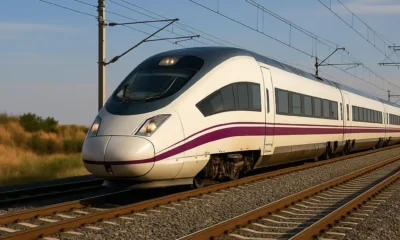

€26 million allocated for new AVE railway station in Almeria
Published December 23, 2025 | Category: Infrastructure TL;DR: The Andalusian regional government will invest €26 million in the future AVE...


Costa de Almeria closes 2025 with strong tourism momentum ahead of FITUR 2026
Published December 23, 2025 | Category: Community TL;DR: Costa de Almeria has wrapped up 2025 with more than 70 tourism...
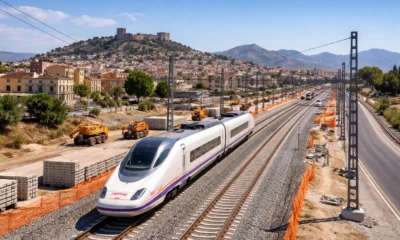

High-Speed Rail to Almeria Faces New Challenge After Roman Cemetery Found in Lorca
Published December 22, 2025 | Category: Infrastructure TL;DR: A late Roman cemetery discovered during AVE tunnelling works in Lorca adds...

Cantoria guide. Discover Cantoria
Published January 6, 2026 | Category: Travel Tips TL;DR: Cantoria is a larger inland town in the Almanzora valley shaped...

Canjayar guide. Discover Canjayar
Published January 4, 2026 | Category: Travel Tips TL;DR: Canjayar is a larger inland town in the Andarax valley with...


Berja guide. Discover Berja
Published January 4, 2026 | Category: Travel Tips TL;DR: Berja is a medium-sized town in the western Alpujarra of Almeria....

Bentarique guide. Discover Bentarique
Published January 4, 2026 | Category: Travel Tips TL;DR: Bentarique is a small agricultural village in the Andarax Valley, Almeria....
-
 Community2 days ago
Storm Francis brings snow to inland Almeria as yellow alert remains active
-
 Community3 days ago
AEMET activates yellow alert in Almeria as Storm Francis brings heavy rain
-

 Events5 days ago
Three Kings parades moved forward in Almeria
-
 Travel Tips4 days ago
Benahadux guide. Discover Benahadux
-

 Community5 days ago
Storm Francis brings heavy rain