
Nature & Environment
Puerto de la Ragua Reopens | Limited Facilities Now, Full Comeback 2027
Published December 8, 2025 | Category: Travel Tips
TL;DR: Puerto de la Ragua, Almeria’s only winter resort, is reopening after five years — but only with basic services for now. Big upgrades are underway, with a full mountain-tourism transformation planned for 2027.
Puerto de la Ragua Reopens with Basic Services — Full Transformation Planned for 2027
Hidden high in the Sierra Nevada mountains, right on the boundary between Almeria and Granada, Puerto de la Ragua is preparing to welcome visitors again — slowly. After five years of closure, the winter resort is reopening with just two operational services: an information point and basic restrooms. What may seem like a modest restart today is actually the beginning of an ambitious relaunch that will reshape the future of this unique mountain location.
What’s Open Right Now?
The resort is entering a transitional phase. Visitors can freely access the surrounding natural environment — panoramic viewpoints, walking areas and trailheads — while staff provide essential information about routes, weather conditions and access. For now, the on-site information point will operate from 09:00 to 16:00, offering guidance for hikers, cyclists and winter travellers heading into the Sierra Nevada National Park.
Restroom facilities are also available, but there is no grooming of slopes, no cross-country skiing, no sledding and no equipment rental. That means the resort remains closed to winter sports for this season, and likely the next.
A Symbolic Reopening — And a First Step Forward
Before its closure, the area attracted up to 8,000 visitors per week during snowy spells. The local consortium responsible for managing the pass sees this phased reopening as a way to rebuild tourism gradually, strengthen access control and reconnect travellers with the region. In peak winter weekends, vehicle traffic often overwhelmed parking areas. Introducing services like possible shuttle buses between the nearby mountain towns of Nevada and Ferreira is already being considered to reduce congestion and preserve the natural environment.
Puerto de la Ragua’s location inside the Sierra Nevada National Park makes it a privileged high-altitude destination. At around 2,041 metres, it offers clean alpine air, quiet trails and the feeling of being truly immersed in nature. Reopening the area — even in a basic form — allows residents and travellers once again to explore one of the highest points accessible from Almeria province.
Nearly €2 Million in Works — And Up to 160 Beds
The future of Puerto de la Ragua depends on an extensive renovation of its main building, which will redefine the entire visitor experience. The investment, close to €2 million, is financed by the Provincial Council of Granada and the municipalities that make up the management consortium — including Bayarcal (Almeria), Nevada and Ferreira.
The former hostel will be modernised into a mountain refuge offering restaurant service, sports-equipment storage and rental, and multiple accommodation areas. Plans include:
- Ground floor: bar-restaurant and four hostel-style rooms
- Upper floor: seven rooms for overnight stays
- Lower level: equipment hire and storage for snow and mountain sports
Once fully completed, the building could house up to 160 guests at the same time — transforming Puerto de la Ragua from a seasonal ski stop into a year-round adventure base. Management will remain in the hands of the existing inter-municipal consortium, backed by a dedicated budget of €1.67 million to launch this next phase.
From Cross-Country Skiing to Mountain Tourism
In the 1990s, the resort thrived thanks to the momentum of major events like the Alpine Ski World Championships in Sierra Nevada. Four cross-country circuits were developed and competitions were held at altitude. There were even dreams of Olympic events and university winter games. But the combination of environmental restrictions and limited snowfall — worsened by climate change — prevented artificial snowmaking and reduced the viability of a long Nordic skiing season.
Today, the strategic focus has shifted. Instead of relying on unpredictable snow, the region is investing in mountain sports, cycling tourism, hiking and nature-based activities. The goal: attract visitors not only in the depths of winter, but in spring, summer and autumn as well. This year-round perspective could help boost local employment and stimulate economic life in mountain areas affected by depopulation.
When Will Everything Be Ready?
If construction stays on schedule, the complete transformation of Puerto de la Ragua could be ready by late 2026 and consolidated in 2027. That would mark the start of fully restored facilities — accommodation, restaurants, organised access to nature activities and an updated tourism model built around sustainability.
Until then, this reopening is simply the first step: a symbolic return to life for a site with enormous potential — and one that holds a special place in Almeria as the province’s only winter resort.
For anyone who loves mountains, clean air and remote landscapes, Puerto de la Ragua might soon become one of the most exciting gateways to the natural side of southeastern Spain.
Want to discover more parks, nature routes and hidden landscapes? Explore our Travel Tips section.
Nature & Environment
Snow in Almeria: Calar Alto Turns White as Rain Reaches Much of the Province
Published December 1, 2025 | Category: Nature & Environment
TL;DR: Snow returned to the province on Sunday afternoon, covering Calar Alto in white and bringing steady rainfall to more than a dozen towns as cold winter air settled in.
Snow in Almeria Returns to Calar Alto as Widespread Rain Reaches Much of Almeria
Snow in Almeria made an early return this weekend as the highest peaks of the Sierra de los Filabres turned white once again. The Calar Alto area, home to one of Spain’s main high-altitude observatories, saw fresh snowfall on Sunday afternoon, marking one of the first notable winter episodes of the season.
At 2,168 metres above sea level, temperatures in Calar Alto dropped below zero, allowing snow to accumulate around the upper slopes and surrounding pine forests. The cold air mass has also brought a sharp temperature drop across inland municipalities, with places like Chirivel, Maria, Velez-Rubio and Velez-Blanco expected to fall close to 3ºC overnight.
Rainfall Across the Province
Alongside the snowfall, steady rain moved across a wide area of the province on Sunday. According to data from regional meteorological networks, Ohanes recorded the highest recent accumulation with nearly 6 litres per square metre in one hour. Felix also registered significant rainfall, followed closely by Canjayar and Abrucena.
In the western and central regions, towns such as Dalias, Enix, El Ejido and Roquetas de Mar measured between 3 and 4 litres per square metre during the afternoon. Lighter but continuous rainfall was also reported in Finana, Fondon, Illar, Vicar, La Mojonera, Alcolea and Berja.
Winter Conditions Settling In
With temperatures continuing to drop and rain spreading across much of the province, the transition into December is now clearly underway. More unsettled weather is expected in the coming days as the cold air mass remains over the region.
For more environmental updates from across the province, visit our Nature & Environment section.
Nature & Environment
Junta Rejects New Camping Project in Cabo de Gata
Published November 28, 2025 | Category: Nature & Environment
TL;DR: The regional government has rejected a proposed camping with 42 bungalows in the Cabo de Gata-Nijar Natural Park because it was too close to an existing motorhome area.
Junta Blocks New Camping Project Near Cabo de Gata
A plan to build a camping complex with 42 bungalows in the La Joya area of Agua Amarga, inside the Cabo de Gata-Nijar Natural Park, has been rejected by the regional government. The project, which included reception facilities, a restaurant, bar, small supermarket and leisure areas, has been denied unified environmental authorisation.
According to the Junta de Andalucía, the project is incompatible with the current planning rules for the natural park. One of the key points is distance: any new tourist camping site in this zone must be located at least six kilometres away from another existing campsite.
In this case, there is already an authorised motorhome area in Agua Amarga, just one kilometre from the proposed site. Under the current tourism regulations, this motorhome area is officially classified as a tourist camping, which means the new project would not meet the required separation distance.
The decision effectively halts the development and sends a clear signal that new tourist accommodation inside protected areas will be strictly evaluated against existing facilities and environmental rules.
For more stories about protected areas and environmental policy, visit our Nature & Environment section.
Infrastructure
Palomares PA-4 urbanisation project: environmental risks, nuclear legacy and coastal regression
Published November 16, 2025 | Category: Infrastructure
TL;DR: The Palomares PA-4 urbanisation project — a plan for 1,600 homes and a hotel on a fragile coastal area — has received regional approval despite flood risks, ecosystem vulnerability, water pressure and proximity to Palomares’ radiological monitoring zone. Environmental groups warn that the project ignores long-term climate projections and coastal regression.
Palomares PA-4 urbanisation project: a new mega-development
Table of Contents
- Overview
- The nuclear legacy: why Palomares remains sensitive 60 years later
- A fragile ecosystem: coastal sand formations, vegetation and biodiversity
- Water pressure and desalination dependency in Levante Almeriense
- Flood zones, sea-level rise and coastal regression
- Urban planning timeline: an old licence in a new climate reality
- The municipal position and the political dimension
- Comparisons with Mojácar, Vera Playa and Terreros
- Tourism, hotel capacity and economic expectations
- Conclusion
Overview
The PA-4 urbanisation sector in Palomares proposes the construction of 1,600 homes and a hotel next to Quitapellejos beach, in one of the most environmentally delicate zones of Cuevas del Almanzora. The regional environmental ruling, issued by the Junta de Andalucía, concludes that the project is “compatible” as long as extensive conditions are met.
Environmental groups argue the opposite, warning that the project could damage fragile coastal habitats, increase flood risks and add population pressure to an area already experiencing water constraints and coastal regression.
Nuclear context surrounding the Palomares PA-4 urbanisation project
The 1966 accident involving US thermonuclear bombs dispersed plutonium dust over several hectares of Palomares. Although partially cleaned, the area still maintains monitored land under the supervision of CIEMAT.
The PA-4 area sits just outside the radiological perimeter, but environmental groups highlight that the contaminated soil has never been fully removed, and future decontamination could be complicated by large-scale residential occupation.
A fragile ecosystem: coastal sand formations, vegetation and biodiversity
The project area contains low coastal sand formations, halophytic vegetation and habitat zones identified as environmentally sensitive. The Spanish ruling explicitly acknowledges the presence of dunas and habitats of community interest, even if these formations are not visually large dunes.
Ecologists warn that proposed “restoration” and “transplanting” measures are unreliable, as coastal sand systems depend on wind dynamics, sediment supply and storm patterns that cannot be artificially replicated.
Water pressure and desalination dependency in Levante Almeriense
Over the past decade, water supply for Levante Almeriense has required emergency interventions. The region depends heavily on the Galasa network and the Carboneras desalination plant. The Junta accepts existing certificates but environmental groups argue that adding an estimated 4,000 new residents increases long-term vulnerability given past shortages and infrastructure failures.
Flood zones, sea-level rise and coastal regression
The Ministerio para la Transición Ecológica (MITECO) identifies the Quitapellejos sector as an area experiencing:
- coastal regression,
- stronger seasonal storms,
- low land elevation,
- increasing exposure due to climate change.
The original planning documents proposed channelling rainwater through streets towards the shoreline—an approach ecologists consider unacceptable under modern coastal-risk standards.
Urban planning timeline: an old licence in a new climate reality
The PA-4 sector holds longstanding urbanisation rights dating back decades. This older licence underpins the current project, despite being drafted in a period without today’s climate science, sea-level projections or updated coastal protection laws.
Environmental organisations argue that inactivity over such a long time should invalidate the licence; however, the Junta has not questioned its validity.
The municipal position and the political dimension
The Ayuntamiento de Cuevas del Almanzora supports the project, citing a lack of hotel beds, economic benefits and competition with neighbouring coastal towns. The position has remained consistent across political parties.
Environmental groups counter that PA-4 is the wrong location for high-density development due to flood risks, ecosystem fragility and the still-unresolved radiological legacy.
Comparisons with Mojácar, Vera Playa and Terreros
Supporters compare the project to existing developed areas such as Mojácar and Vera Playa. Ecologists argue that these comparisons ignore fundamental differences:
- Mojácar has a longer and more stable coastline.
- Vera Playa was urbanised before modern regulations.
- Terreros shows the risk of speculative projects that leave unfinished streets and infrastructure.
Tourism, hotel capacity and economic expectations
Cuevas del Almanzora lacks hotel accommodation, and supporters argue a new hotel could stimulate tourism. However, ecologists warn that:
- Water demand will increase.
- Sewage systems depending on pumping stations are vulnerable to storms.
- Flood-exposed coastal real estate may be risky long-term.
Conclusion
The approval of the Palomares PA-4 urbanisation project highlights the ongoing tension between economic development and environmental protection along Almeria’s fragile coastline. While technically allowed under strict conditions, the combined risks — coastal regression, flood exposure, ecosystem fragility and proximity to monitored nuclear-contaminated land — raise questions about its long-term sustainability.
For more updates from across the province, visit our Nature & Environment category.
Almeria News
Las Negras Cleanup This Sunday: Volunteers Join Níjar Town Hall in Cabo de Gata
Published November 2025 | Category: Nature & Environment
TL;DR: This Sunday, Las Negras hosts a community cleanup with international volunteers, supported by the Níjar Town Hall and funded through the EU’s European Solidarity Corps.
Las Negras cleanup this Sunday: volunteers unite to protect Cabo de Gata–Níjar Natural Park
The village of Las Negras will host a community cleanup this Sunday, 16 November, bringing together the Níjar Town Hall and an international team of volunteers. The event aims to protect one of the most environmentally sensitive areas of the Cabo de Gata–Níjar Natural Park while raising awareness among residents and visitors.
Overview
The activity is part of a month-long programme funded by the European Solidarity Corps (ESC), which brings young volunteers from across Europe to collaborate on environmental initiatives in the Níjar municipality. The volunteers are currently based in Fernán Pérez and are participating in coastal cleanups, neighbourhood maintenance and environmental workshops in local schools.
Event details
Date: Sunday, 16 November 2025
Start time: 09:00
Meeting point: Las Negras roundabout
The cleanup will focus on the village entrance, the beach area and the dry riverbed. All tools and materials — including gloves and bags — will be provided by the organisers. Residents and visitors interested in joining can contact the coordination team at +39 320 063 8535.
Environmental context
The initiative comes after a summer in which the Níjar Town Hall removed more than seven tons of waste from popular beaches such as Agua Amarga and San José. During the high season, the Natural Park faces intense visitor pressure: nearly 50,000 vehicles passed through the controlled access points to Mónsul, Barronal and Genoveses between June and September.
Local authorities highlight that community-led activities like this one help mitigate seasonal impact while strengthening environmental stewardship throughout the year.
For more updates from across the province, visit our Community category.

Playa de Monsul – Ultimate Beach Guide 2025

Playa de los Genoveses – Ultimate Beach Guide 2025

Puerto de la Ragua Reopens | Limited Facilities Now, Full Comeback 2027

Mojacar – One of the Most Beautiful Places in Almeria during Christmas

Arboleas Christmas Lights 2025 | Switch-On Ceremony in Plaza de España

Las Terrazas Macenas Gets Green Light | New €50M Residential Project

Things to Do at Christmas in Mojacar: Lights, Markets & Family Fun

Christmas in Albox Begins with Return of Monumental Nativity Scene

Hotels in Almeria Expect 66% Occupancy During December Long Weekend

Mojacar Christmas Lights Switch-On Makes History with Record Visitor Numbers
Las Terrazas Macenas Gets Green Light | New €50M Residential Project
Published December 6, 2025 | Category: Real Estate & Economy TL;DR: Las Terrazas Macenas, a new €50.4 million residential development...
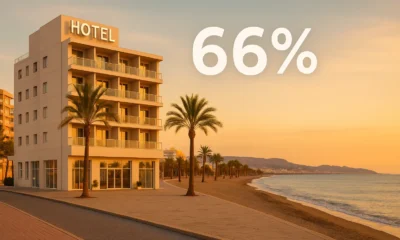
Hotels in Almeria Expect 66% Occupancy During December Long Weekend
Published December 5, 2025 | Category: Travel Tips TL;DR: Hotels in Almeria are expected to exceed 66% occupancy during the...


Albox Consumer Voucher: €50,000 in Discounts for Christmas Shopping
Published December 1, 2025 | Category: Real Estate & Economy TL;DR: Albox has launched the second edition of its Albox...


Blanco Macael Marble Moves Toward EU PGI Status, Protecting Almeria’s White Gold
Published December 1, 2025 | Category: Real Estate & Economy TL;DR: Macael marble, long celebrated as Almeria’s “white gold,” is...

Mojacar – One of the Most Beautiful Places in Almeria during Christmas
Published December 8, 2025 | Category: Towns & Villages TL;DR: Mojacar is one of the most beautiful places in Almeria,...
Things to Do at Christmas in Mojacar: Lights, Markets & Family Fun
Published December 5, 2025 | Category: Events TL;DR: Looking for things to do at Christmas in Mojacar? The town offers...
Christmas in Albox Begins with Return of Monumental Nativity Scene
Published December 5, 2025 | Category: Events TL;DR: Christmas in Albox officially began yesterday with the return of the Monumental...


Roquetas de Mar Christmas 2025 – Full Guide to Events, Lights, Concerts & Family Activities
Published December 3, 2025 | Category: Events TL;DR: Roquetas de Mar launches its Christmas 2025 programme under the theme “Estrella...
-
Events7 days ago
Roquetas de Mar Christmas 2025 – Full Guide to Events, Lights, Concerts & Family Activities
-
 Community6 days ago
Mojacar Christmas Lights Switch-On Makes History with Record Visitor Numbers
-
Real Estate & Economy5 days ago
Hotels in Almeria Expect 66% Occupancy During December Long Weekend
-
Events5 days ago
Christmas in Albox Begins with Return of Monumental Nativity Scene
-
Real Estate & Economy4 days ago
Las Terrazas Macenas Gets Green Light | New €50M Residential Project
-
Events5 days ago
Things to Do at Christmas in Mojacar: Lights, Markets & Family Fun