
Travel Tips
Almeria Weather Today: Cool Start, Mild Afternoon Across Province
Published December 2, 2025 | Almeria Weather Today
TL;DR: Almeria province starts the day cool and partly cloudy, but sunshine will dominate by midday. Coastal and Levante areas will reach 18–20°C, while the northern inland remains cooler with 14–16°C. No rain and no alerts for today, according to the AEMET.
Cool Morning, Mild Afternoon Across Almeria Province
Almeria begins Tuesday with a fresh and partly cloudy start, but conditions improve quickly. According to the AEMET, the entire province can expect a dry, calm day with a mix of sunshine and light cloud.
Northern inland: Towns such as Vélez-Rubio, María, and Chirivel wake up to 8–11°C and some morning cloud. Skies clear later, bringing highs of 14–16°C.
Poniente & Almeria city: A light-cloud morning with 10–12°C gives way to a sunny afternoon, reaching 19–20°C. No weather alerts are in effect today.
Levante: Vera, Garrucha, Mojacar, and Huércal-Overa begin cloudy at 11–13°C, but sunshine returns by midday with temperatures peaking at 18–20°C.
South coast & Cabo de Gata: A half-cloudy start with 11–12°C develops into a bright, pleasant afternoon along the coast, with highs around 18–19°C.
Overall, Almeria enjoys a soft and stable winter day — ideal for outdoor plans or a calm start indoors. Stronger winds are expected later this week, but today remains settled across all regions.
More local travel advice can be found in our Travel Tips section.
Travel Tips
Tabernas Officially Named One Of Spain’s New Magical Towns
Published November 18, 2025 | Category: Towns & Villages
TL;DR: Tabernas has officially been named one of Spain’s new “Magical Towns” for 2026 — recognised for its desert landscapes, cinema heritage, cultural traditions and unique identity within inland Almería.
Tabernas becomes one of Spain’s new “Magical Towns”
Tabernas, long known for its desert scenery and movie history, has been formally incorporated into the 2026 Pueblos Mágicos de España network. This national programme includes over 171 towns distinguished for their authenticity, natural and cultural value, and ability to offer visitors meaningful, memorable experiences. With this recognition, Tabernas joins the growing list of inland destinations gaining prominence within Spain’s tourism landscape.
Why Tabernas was selected
The Town Council spent several months preparing its nomination, presenting a broad range of strengths: the Tabernas Desert, unique in Europe; its historic architecture, including the parish church and medieval castle; a growing range of rural accommodations; its gastronomy; and the traditions that shape its cultural identity. According to Mayor José Díaz, the distinction “is a strategic boost that positions Tabernas as a unique national destination.”
He highlighted that visitors discover far more than a desert: “They discover hospitality, festivals, culture, and a tourism offer that we continue expanding thanks to the joint effort of the local business community and residents.”
A short history of Tabernas
Tabernas sits in a landscape inhabited since prehistoric times. Archaeological evidence around Terrera Ventura points to Bronze Age settlements, and later Roman and Islamic periods left a visible footprint in the surrounding valleys. During Muslim rule, the position of Tabernas made it strategically valuable, and its hilltop castle served as a defensive point overseeing routes between the coast and inland Granada.
Following the Christian Reconquista, Tabernas developed as a small agricultural centre surrounded by terraced orchards and traditional irrigation channels. In the 20th century, the town became internationally known when film studios chose the desert as the backdrop for more than 300 productions — from spaghetti westerns to international blockbusters. This cinematic legacy still drives a large part of its tourist appeal.
Where the name “Tabernas” comes from
The name Tabernas is widely believed to derive from the Latin tabernae, meaning “inns” or “roadside shelters.” During the Roman period, the area lay on an important inland corridor linking the Mediterranean coast with the Guadix plateau, and resting points for travellers were common. Over centuries, the word evolved into Tabernas, retaining its association with routes, travellers and exchange — a fitting origin for a place shaped by movement, trade and frontier landscapes.
The Tabernas Desert — A unique landscape in Europe
The Desierto de Tabernas is one of the town’s greatest assets. Declared a Natural Area, it is considered the only true semi-arid desert on the European continent. Its terrain — marked by badlands, canyons, dry riverbeds and sculpted hills — has inspired filmmakers, naturalists and photographers for decades.
The desert’s combination of silence, vastness and otherworldly geology is one of the reasons Tabernas has become a reference point for sustainable, nature-based tourism. Visitors often pair the town with hikes, 4×4 routes, birdwatching or visits to film sets located a short distance from the centre.
What joining “Magical Towns” means for Tabernas
Inclusion in the Pueblos Mágicos network is more than an honorary title. It brings tangible benefits:
- National promotional campaigns across tourism channels
- Inclusion in official visitor catalogues and thematic routes
- A “tourist passport” allowing travellers to collect stamps from each Magical Town
- Increased visibility for local accommodations, restaurants and small businesses
- Support for new investment and sustainable rural development projects
For Almería province, Tabernas’ incorporation reinforces the importance of inland destinations traditionally overshadowed by coastal tourism.
Culture, gastronomy & local traditions
Although often associated with its desert, Tabernas has a strong cultural identity shaped by centuries of rural life. The town celebrates traditional festivals with processions, open-air music and gastronomy rooted in local products.
Local cuisine includes migas almerienses, carne en salsa, almond-based pastries and dishes influenced by both Mediterranean and inland mountain flavours. Bars and family-run restaurants offer tapas that reflect seasonal produce and long-standing culinary habits.
Nature & walking routes around Tabernas
The municipality manages several signposted trails suitable for all levels. Popular routes include:
- Rambla de Tabernas — A gentle walk through the desert’s dry riverbeds, ideal for photography and geological observation.
- Castillo de Tabernas hike — A short climb offering panoramic views of the town and badlands.
- Ruta de los Westerns — A thematic trail connecting filming locations and historic viewpoints.
These routes are promoted by the Town Hall and form part of ongoing efforts to develop sustainable outdoor tourism.
The philosophy behind “Magical Towns”
The organisation describes its towns as “gems” — not found in crowded tourist circuits but in places that preserve identity and authenticity. The project aims to encourage tourism that respects the land, protects heritage and strengthens local communities.
22 new towns join the 2026 network
Tabernas is one of 22 new municipalities incorporated into the network for 2026. Ranging from islands to mountain valleys, these towns represent a mosaic of landscapes and traditions that enrich Spain’s rural tourism offer. For Tabernas, the distinction serves as recognition of its natural uniqueness and growing role as a cultural and nature-based destination.
Official source
For more information, visit the official organisation: pueblosmagicos.es
Planning more inland discoveries? Visit our guide: Most Beautiful Villages in Almería.
Travel Tips
Mojacar Pueblo Guide – Discover Mojacar Pueblo
Published November 17, 2025 | Category: Towns & Villages
TL;DR: Mojacar Pueblo is a white hilltop village with Moorish heritage, iconic viewpoints and labyrinth streets filled with flowers. A must-visit for sunsets, ceramics, tapas terraces and cultural events all year round. It is officially listed among Andalusia’s “Pueblos con Encanto”. Mojacar Pueblo is officially one of Almeria’s most beautiful villages.
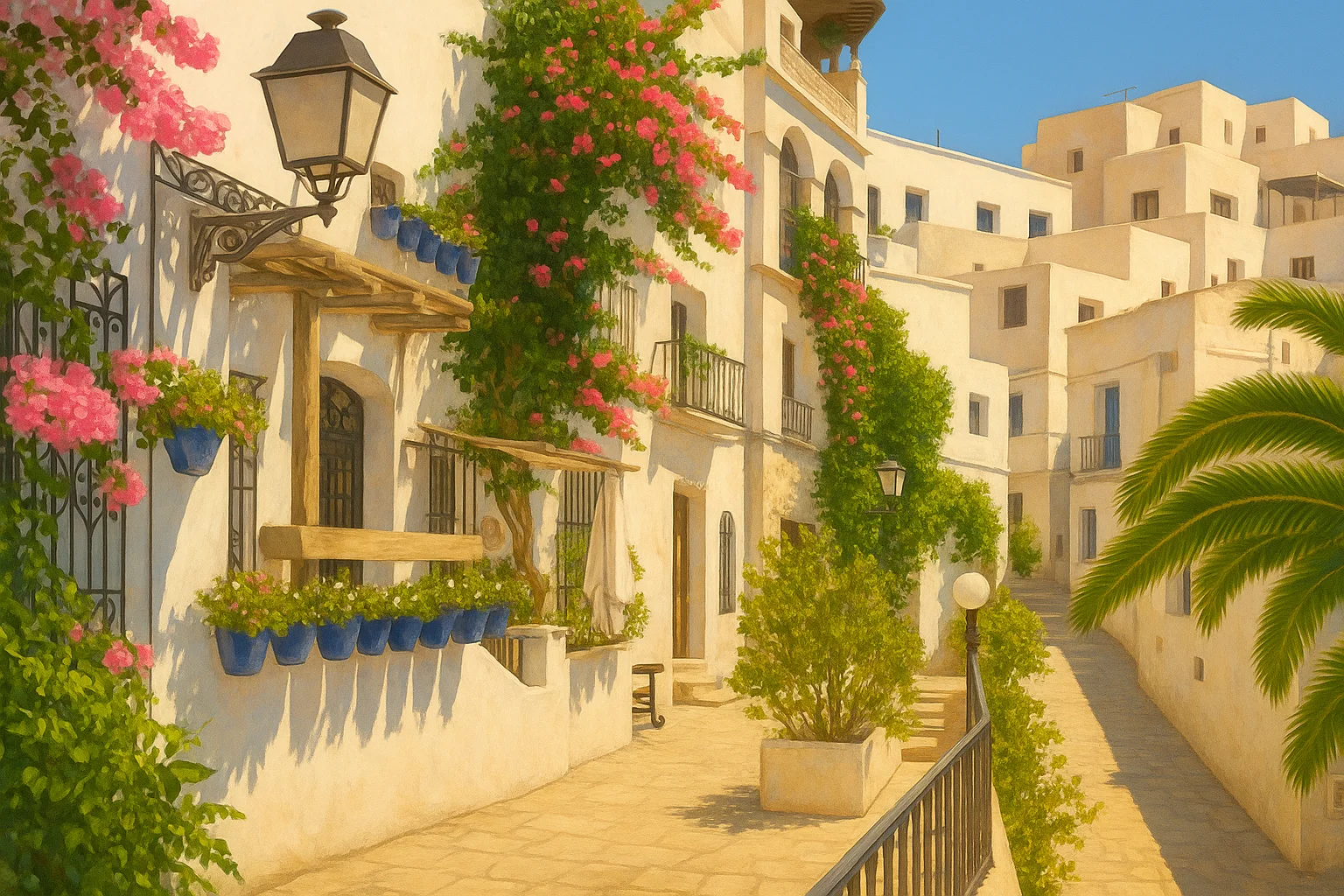
Mojacar Pueblo Guide — Whitewashed Viewpoints, Moorish History & Timeless Streets
Mojacar Pueblo is one of the most recognisable villages in Almeria. Perched on a steep hill overlooking the Mediterranean, the Pueblo blends whitewashed Andalusian architecture, Moorish alleyways, craft shops and some of the best panoramic viewpoints on the Levante coast. It is officially listed among Andalusia’s “Pueblos con Encanto” and remains a favourite stop for photographers, hikers and travellers seeking culture and atmosphere.
Geography & Setting
Mojacar Pueblo rises almost 200 metres above sea level, forming a natural lookout over the Sierra Cabrera and the coastline stretching from Garrucha to Carboneras. Its compact layout, stepped alleys and shaded courtyards reflect centuries of adaptation to mountain terrain and summer heat. From the main square, the Mediterranean Sea appears framed between rooftops — a signature view of the village.
History — From Moorish Roots to Modern Village
The village traces its origins to ancient settlements around the Sierra, but Mojacar’s strongest identity comes from its Moorish past. For centuries it was part of the Nasrid defensive chain, and the present-day street layout still follows the old medina structure. After the Christian reconquest, the Pueblo consolidated around the Plaza del Parterre, the Church of Santa María (built in the 16th century) and several fortified houses that still define the skyline.
Today, Mojacar Pueblo is a protected heritage site, with numerous restored façades, tiled signs and Arab-influenced arches marking the original gates of the medina.
What to See & Do in Mojacar Pueblo
- Mirador Plaza Nueva: The most iconic viewpoint, with sweeping views over the valley, coastline and Sierra Cabrera.
- Mirador del Castillo: A panoramic terrace at the highest point of the village.
- Santa María Church: A fortress-church built on the foundations of the old mosque.
- Porta de la Ciudad / City Gate: Remnant of the old Moorish entrance.
- Labyrinth Streets: Wander through narrow alleys decorated with bougainvillea, pottery and local artisan shops.
- Ceramics & Crafts: Mojacar is known for pottery, tiles, jewellery and traditional indalos.
Official municipal information: Ayuntamiento de Mojacar.
Hiking & Outdoor
The Pueblo is a gateway to the lower slopes of Sierra Cabrera, offering short panoramic trails and longer circular routes linking Mojacar, Turre and the mountain villages. Expect steep terrain, sandstone formations and excellent sunrise/sunset conditions.
Festivals & Cultural Life
Mojacar’s festival calendar is one of the most active on the Levante coast. Key events:
- Festividad de San Agustín (August): Music, parades and cultural activities around the Pueblo.
- Moors & Christians (June): The largest annual celebration — colourful costumes, medieval-style parades and reenactments honouring Mojacar’s Moorish and Christian heritage.
- Semana Santa: Processions through the narrow streets.
For province-wide festivity dates, including Mojacar’s local holidays, visit our guide: Almeria Local Holidays 2026.
Bars, Food & Local Atmosphere
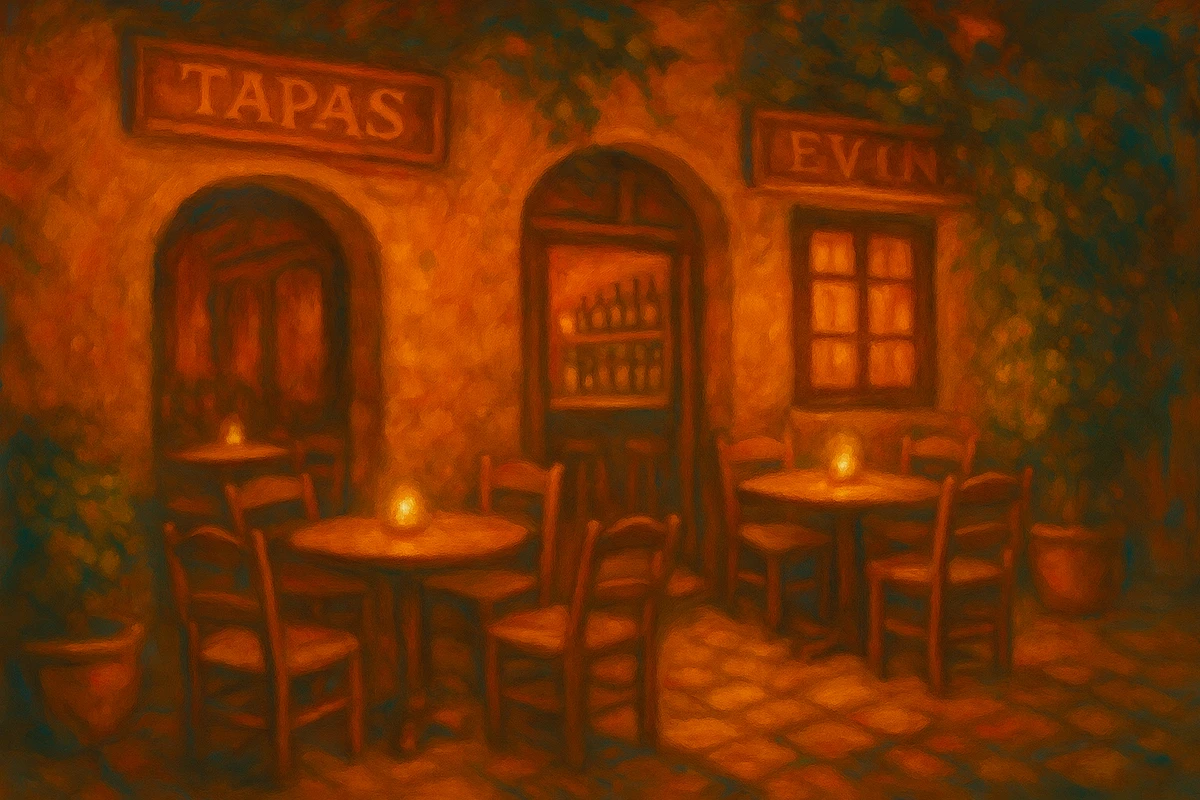
Mojacar Pueblo has a lively gastronomic scene. Expect tapas terraces with sea views, small wine bars on quiet alleys, and restaurants serving traditional Almerian dishes: migas, gurullos, roasted meats, fresh vegetables and local olive oils. Evening light turns the whole village golden — one of the best sunset spots in the province.
Local Markets (Mercadillos)
Weekly General Market (Mercadillo Generalista)
- Day: Wednesday (non-holiday)
- Time: 9:00 – 14:00
- Location: Parking Plaza Rey Alabez, 04638 Mojácar — next to the football field
- Stalls: ~50
- Products: Fresh fruit and vegetables, clothing, footwear, bags, belts, household goods, plants and flowers, cheeses, cold cuts, dried fruits, nuts, pickles and sweets.
This is Mojacar’s main weekly street market and one of the largest in the Levante area, attracting both residents and visitors.
Sunday Antiques & Second-Hand Market (Rastro de Antigüedades)
- Day: Sunday (all year)
- Time: 9:00 – 14:00
- Location: At the village entrance, next to the Centro de Usos Múltiples
- Stalls: ~50
- Type: Second-hand, antiques, collectibles
This weekly rastro is popular for vintage items, books, homeware, collectibles and occasional artisan pieces — a lively Sunday plan for locals and visitors.
Getting There
- By car: 10 minutes from Mojacar Playa; 15 minutes from Garrucha; 1 hour from Almeria city via A-7.
- Parking: Large car park at the entrance of the Pueblo, with escalators and lifts into the historic centre.
- Public transport: Regular bus service connects Mojacar Playa ↔ Mojacar Pueblo ↔ Garrucha.
Practical Information — Mojacar Pueblo
- Town Hall (Ayuntamiento de Mojácar): Plaza del Ayuntamiento, 1 —
📞 950 615 009 —
mojacar.es - Tourist Office (Oficina de Turismo): Plaza Nueva —
📞 950 478 646 —
Tourism info - Local Police (Policía Local): Calle Horno —
📞 600 472 000 / 950 472 000 - Medical Centre – Mojácar Pueblo (Consultorio Médico):
Avenida de París, 35, 04638 Mojácar —
📞 950 451 601 - Medical Centre – Mojácar Playa:
Avenida de Andalucía, 20, Mojácar Playa —
📞 950 451 630 - Pharmacies (Farmacias):
- Farmacia Mojácar Pueblo — Plaza del Ayuntamiento — 📞 950 478 019
- Farmacia Mojácar Playa — Av. del Mediterráneo, 123 — 📞 950 478 372
- Emergency Numbers (Spain-wide):
112 (General) · 061 (Health Emergencies) · 062 (Guardia Civil) · 091 (National Police)
Public Services & Useful Facilities
- Centro de Usos Múltiples (Multi-Use Centre):
Entrance of Mojácar Pueblo — hosts the Sunday antiques market and community events. - Public Library (Biblioteca Municipal):
Plaza Nueva —
📞 950 615 009 (ext. cultural services) - Sports Centre (Pabellón Deportivo Municipal):
Calle Luis Vives —
📞 950 615 009 —
Offers gym, indoor courts and local sports leagues. - Municipal Swimming Pool:
Adjacent to the sports centre — seasonal timetable. - Recycling & Waste Point (Punto Limpio):
Camino del Palmeral —
Schedule varies by season (see mojacar.es → Medio Ambiente). - Bus Services (Autobuses Alsina Graells):
Stops at Mojácar Pueblo & Mojácar Playa —
Routes to Garrucha, Vera, Carboneras, Almería.
Timetables: alsa.es
For more white villages, inland routes and local heritage guides, visit our Travel Tips category.
Travel Tips
Laujar de Andarax Guide. Discover Laujar de Andarax
Published November 17, 2025 | Category: Towns & Villages
TL;DR: Laujar de Andarax is a historic Alpujarra village at the headwaters of the Andarax River — chestnut and pine forests, classic Sierra Nevada hiking routes, wine traditions, and lively local fiestas around its Plaza Mayor.
Laujar de Andarax Guide. History, Nature & Local Festivals
Often described as one of the gateways to the Alpujarra of Almeria, Laujar de Andarax sits in a green basin at the headwaters of the Andarax River. White houses step up the hillside, backed by the southern slopes of the Sierra Nevada and surrounded by orchards, vineyards and chestnut groves. It is a natural base for hiking, village-to-village day trips and slow travel weekends focused on food, wine and mountain scenery.
Geography & Setting
Laujar de Andarax lies in the eastern Alpujarra, in the upper Andarax valley, at around 900 metres above sea level. From here the river begins its long journey toward the coast, while forest tracks climb into the Sierra Nevada above. The municipality’s territory includes fertile river terraces, terraced farmland and extensive pine and chestnut woods, making it noticeably greener and cooler than the coastal plain in summer. The village is compact, centred on the Plaza Mayor de las Alpujarras and its historic streets.
History — From Moorish Past to Alpujarra Capital
Like many Alpujarra villages, Laujar has deep roots in the Muslim period, when terraced agriculture and irrigation channels shaped the landscape. The Christian repopulation after the 16th-century Morisco rebellion consolidated today’s urban layout around churches, plazas and small craft workshops. Over time, Laujar became an administrative and symbolic centre of the Alpujarra Almeriense, with a local economy based on agriculture (vineyards, olives, fruit), forestry and small-scale services. Visitors today still sense this layered history in the narrow streets, traditional architecture and surviving water infrastructure.
What to See & Do
- Plaza Mayor de las Alpujarras: The main square is the social heart of Laujar, lined with cafés and municipal buildings. It is a good starting point for exploring the old quarter and sitting out in the evening.
- Historic Quarter: Wander through sloping streets with whitewashed façades, small squares and viewpoints over the valley. Look out for fountains, traditional doorways and remains of old defensive structures.
- Area Recreativa El Nacimiento: Just outside the village, this riverside recreation area marks one of the most popular access points to local walking routes, with picnic tables, shade and easy family paths.
- Local Churches & Heritage: The parish church and smaller hermitages reflect Laujar’s post-Reconquista history. Check the municipal tourism pages for updated opening times and guided visit options.
For visitor information, walking ideas and guided visit details, see the official municipal tourism section: Ayuntamiento de Laujar de Andarax — Turismo.
Local Festivals & Holidays
Laujar de Andarax has a full calendar of fiestas and religious celebrations typical of the Alpujarra. Expect summer festivities with open-air music, processions, children’s activities and food stalls, often centred on the Plaza Mayor and nearby streets. Autumn and harvest-time events highlight local wine and seasonal produce, while winter and Easter bring more traditional religious ceremonies.
Exact días festivos locales and festival dates can vary each year, so it is always best to confirm via official municipal channels or local noticeboards.
For a province-wide overview of upcoming festivities and public holidays, check the official Almeria Local Holidays 2026 calendar, which includes all major events across the region.
Gastronomy
Food in Laujar de Andarax is firmly rooted in mountain and valley ingredients: olive oil, pulses, garden vegetables, cured meats and hearty stews. Typical dishes echo those of the wider Alpujarra: migas with seasonal toppings, slow-cooked meats, soups enriched with local vegetables and simple grilled dishes. The municipality also has a tradition of local wines and grape products, with small bodegas and producers in the surrounding countryside. Almond-based pastries and sweets appear frequently in bakeries and at fiesta time.
Local Markets
Mercadillo de Laujar de Andarax: Twice a month, Laujar hosts a small but lively general market on the Plaza Mayor.
- Days: 3rd and 17th of each month
- Type: General market (mercadillo generalista)
- Location: Plaza Mayor, town centre
- Opening hours: 09:00 – 14:00
- Number of stalls: Around 10
The market offers a mix of fresh produce, clothing, household goods, seasonal items, and local products. It’s a good moment to experience everyday village life while supporting small vendors from the Alpujarra of Almeria.
Looking for markets across the province? Explore our guides to popular weekly markets in Almeria city, Garrucha, Roquetas de Mar, Mojacar, and Vera.
Nature & Outdoor
Laujar is one of the best bases in the province for accessible Sierra Nevada walking routes. Several signed paths start near the village and the El Nacimiento recreation area, offering everything from family walks to more demanding outings.
- PR-A 35 Sendero Monterrey: A circular route through reforested pine woods with classic views over the Andarax valley and the Sierra de Gádor beyond. Expect moderate gradients and varied scenery.
- Senda de la Hidroeléctrica (PR-A 36): A well-known path following an old hydroelectric line, combining forest tracks, riverside sections and interpretive panels about the area’s natural and industrial heritage.
- Sendero del Aguadero (PR-A 37): Starting near the El Nacimiento area, this route offers a mix of woodland, river scenery and viewpoints over Laujar and the surrounding mountains.
Always check current route conditions, weather forecasts and any local notices before heading out. The municipal website and local tourism office provide updated information on paths and recommended itineraries.
Getting There
- By car: Laujar de Andarax is roughly 1 hour–1 hour 15 minutes from Almeria city, typically via the A-92 inland motorway and regional roads through the Andarax valley. It combines well with nearby villages such as Fondón, Padules or Almócita for a full-day excursion across the Alpujarra Almeriense.
- Public transport: Regional bus services connect Laujar with other valley towns and, on some schedules, with Almeria. Timetables can change seasonally; always check current information before travelling.
- Parking: Street parking is generally available around the village entrances and near the centre. Around El Nacimiento and other recreational areas, use designated parking zones and respect local signage.
Practical Information — Laujar de Andarax
- Town Hall (Ayuntamiento de Laujar de Andarax): Plaza Mayor de las Alpujarras, 9 — 04470 Laujar de Andarax (Almeria) — 📞 950 513 103 — laujardeandarax.es
- Tourism & local services: See the “Turismo”, “Monumentos”, “Gastronomía” and “Rutas y Senderismo” sections on the official website for up-to-date information, maps and contacts.
- Health & pharmacies: Basic health services and pharmacy information are published via municipal and provincial channels; confirm current details locally.
- Emergency (Spain-wide): 112 (General) · 061 (Medical) · 062 (Guardia Civil) · 091 (National Police)
For more villages like this, explore our Travel Tips category — from high Alpujarra viewpoints to desert-edge hamlets in the interior of Almeria.
Activities & Attractions
7 Most Beautiful Villages in Almeria You Must Visit – Official List
Published November 2025 | Category: Travel Tips
TL;DR: Seven villages in Almeria have official recognition for their beauty, history and cultural value. Together they form the Most Beautiful Villages in Almeria, from mountain hamlets to whitewashed craft towns.
The 7 Officially Recognised Most Beautiful and Magical Villages in Almeria
This guide to the Most Beautiful Villages in Almeria highlights seven officially recognised destinations known for their charm, heritage and dramatic landscapes. Almeria is one of Spain’s most diverse provinces, home to whitewashed mountain towns, Moorish history, desert views and fertile valleys.
Among its many picturesque settlements, seven villages hold an official recognition as either “The Most Beautiful Villages of Spain” or part of the “Magical Towns of Spain” network. These associations highlight places with exceptional cultural value, preserved architecture and a strong local identity. Taken together, they form one of the most compelling collections of the Most Beautiful Villages in Almeria.
Below is a complete guide to these seven officially recognised villages — and why each deserves a place on your travel itinerary.
Table of Contents
- 1. Mojacar Pueblo
- 2. Lucainena de las Torres
- 3. Nijar
- 4. Vicar
- 5. Enix
- 6. Laujar de Andarax
- 7. Abrucena
1. Mojacar Pueblo — One of the Most Beautiful Villages in Spain
Perched on a hillside overlooking the Valley of the Pyramids, Mojacar Pueblo is one of Andalusia’s most iconic white villages. Unlike the coastal resort area, the old town maintains a traditional Moorish layout, with narrow streets, whitewashed facades and hidden courtyards.
Key highlights include the City Gate (Puerta de la Ciudad), the atmospheric Plaza del Parterre, the local church dedicated to Santa María, and the Plaza Nueva viewpoint, which offers sweeping views across Mojacar la Vieja and the surrounding sierras.
This village represents the historic heart of Mojacar and remains one of the most photographed destinations in the province.
2. Lucainena de las Torres — Beauty, Flowers and the Vía Verde
One of Almeria’s most admired villages, Lucainena de las Torres is known for its immaculate white houses decorated with vibrant flowers. The peaceful setting contrasts with the impressive industrial heritage of its old iron ore kilns, visible on the edge of the village.
The Vía Verde, a landscaped walking and cycling path built on a former mining railway, offers easy access to the natural surroundings and is one of the area’s most popular outdoor routes.
Its 18th-century parish church and exceptionally well-preserved streets make Lucainena a quintessential Andalusian village.
3. Nijar — Craftsmanship, Jarapas and Andalusian Tradition
Nijar is one of Almeria’s cultural capitals, famous for its pottery, traditional rugs known as jarapas, and its labyrinth of whitewashed streets. The town’s identity is strongly tied to local craftsmanship, with workshops that continue techniques passed down through generations.
Visitors often combine Nijar with excursions into the Cabo de Gata–Nijar Natural Park, making it a perfect blend of culture and nature.
4. Vicar — Art Corners and Panoramic Views
Vicar stands out for its artistic urban spaces, colourful murals and photogenic corners scattered throughout its old village. Its location on the slopes of the Sierra de Gádor gives it excellent panoramic viewpoints.
The village also features a fortified church, charming squares and a growing reputation as a destination for creative tourism thanks to its open-air art installations.
5. Enix — Sierra de Gádor Landscapes and Deep Local History
Nestled in the mountains above Aguadulce, Enix combines dramatic scenery with centuries of history. Its centre is anchored by the 16th-century Church of Our Lady of the Rosary, while small alleyways reveal old stone houses and historic fountains.
Enix is also the birthplace of writer Agustín Gómez Arcos and offers some of the clearest views of the Sierra de Gádor.
6. Laujar de Andarax — Heart of the Alpujarra Almeriense
Laujar de Andarax is one of the most emblematic villages of the Alpujarra Almeriense, known for its natural landscapes, water channels, groves and historic buildings. Its 18th-century town hall, old manor houses and Moorish-influenced architecture make it an essential cultural stop.
Surrounded by the Sierra Nevada foothills, Laujar is also a popular gateway for hikers exploring local trails.
7. Abrucena — El Castillejo and Mountain Traditions
Located at the base of the Sierra Nevada, Abrucena is a mountain village known for its striking archaeological site El Castillejo and its peaceful rural atmosphere. Narrow streets, traditional houses and the Hermitage of the Souls give the village a strong sense of heritage.
Local cuisine — especially stews, sausages and seasonal dishes — remains a highlight for visitors seeking authentic flavours of inland Almeria.
Official recognition
More information about the “Most Beautiful Villages of Spain” can be found at the official website of the association: Los Pueblos Más Bonitos de España.
Why these are considered the Most Beautiful Villages in Almeria
Together, these seven destinations illustrate why they are regarded as the Most Beautiful Villages in Almeria. Each one combines history, architecture, landscape and living traditions — from mountain viewpoints and Moorish streets to local crafts and gastronomy.
For travellers, they offer a concentrated view of what makes this province unique: diversity of scenery, authentic village life and a slower pace far from the standard coastal resorts.
For more village guides and inspiration, visit our Towns & Villages section.

Vera Nativity Scene 2025: A Monumental Journey to Ancient Rome

Almeria Weather Today: Cool Start, Mild Afternoon Across Province

Albox Consumer Voucher: €50,000 in Discounts for Christmas Shopping

Thousands Gather as Mojacar Switches On Its Christmas Lights

Junta Improves Road Safety on the A-334 R4 Through Zurgena

Las Norias Welcomes Christmas with Its Traditional Festive Market

Blanco Macael Marble Moves Toward EU PGI Status, Protecting Almeria’s White Gold

Snow in Almeria: Calar Alto Turns White as Rain Reaches Much of the Province

Christmas in Mojacar

Burger King Vera Playa Opens This December

Albox Consumer Voucher: €50,000 in Discounts for Christmas Shopping
Published December 1, 2025 | Category: Real Estate & Economy TL;DR: Albox has launched the second edition of its Albox...

Blanco Macael Marble Moves Toward EU PGI Status, Protecting Almeria’s White Gold
Published December 1, 2025 | Category: Real Estate & Economy TL;DR: Macael marble, long celebrated as Almeria’s “white gold,” is...


Murcia–Almería High-Speed Rail: €9.6 Million in New Funding
Published November 27, 2025 | Category: Infrastructure TL;DR: Spain has approved €9.6 million in new supply contracts for the Murcia–Almería...


Mojacar Bypass Soon a Reality: Coastal Variant to Boost Mobility and Local Economy
Published November 2025 | Category: Real Estate & Economy TL;DR: The long-awaited Mojacar bypass (“Variante Costera”) is progressing steadily and...
Vera Nativity Scene 2025: A Monumental Journey to Ancient Rome
Published December 2, 2025 | Category: Towns & Villages TL;DR: Vera has inaugurated its Monumental Nativity Scene 2025 at the...
Christmas in Mojacar
Published November 29, 2025 | Category: Events TL;DR: Christmas in Mojacar blends traditional Spanish festivities with Mediterranean charm, offering warm...

Mojácar Christmas 2025: Disney Day & Official Lights Switch-On
Published November 27, 2025 | Category: Events TL;DR: Mojácar Christmas 2025 begins on 29 November with Disney Day, a themed...


Tabernas Officially Named One Of Spain’s New Magical Towns
Published November 18, 2025 | Category: Towns & Villages TL;DR: Tabernas has officially been named one of Spain’s new “Magical...
-
Infrastructure6 days ago
Murcia–Almería High-Speed Rail: €9.6 Million in New Funding
-
Events6 days ago
Mojácar Christmas 2025: Disney Day & Official Lights Switch-On
-

 Events5 days ago
Terreros Slalom 2025: 35 Drivers Compete in a Key Andalusian Championship Round
-

 Community5 days ago
Disney in Almeria: The Forgotten Story of the Park That Almost Happened
-
Towns & Villages1 day ago
Vera Nativity Scene 2025: A Monumental Journey to Ancient Rome
-

 Expats & Living6 days ago
Embargos Bestiales Antas – Affordable Furniture and Home Goods in Almería