
Towns & Villages
Adra Guide. Discover Adra, Almeria — Beaches, History, Nightlife & Local Life
Published October 17, 2025 | Category: Towns & Villages · Travel Tips
TL;DR: Adra is Almeria’s oldest coastal town — a blend of sandy beaches, living fishing traditions, layered history from Phoenicians to Moors, and a lively promenade scene. Come for sea-to-table tapas, Blue-Flag strands, and summer nights that spill onto the paseo.
Adra Guide. Discover Adra, Almeria — Beaches, History, Nightlife & Local Life
Introduction: A Living Port with 2,500 Years of Story
On Almeria’s western edge, near the Granada border, Adra (ancient Abdera) has watched ships come and go for more than two millennia. The town still feels anchored to the sea: fishermen unloading at dawn, families strolling the promenade at dusk, and chiringuitos drifting from coffee to cocktails as the sky fades pink. For travellers who want authentic, coastal Andalusia — with real neighbourhoods, not just resorts — Adra Almeria is a natural fit.
History & Heritage
Adra’s story begins with the Phoenicians, who founded Abdera as a trading post. Under the Romans, it became a bustling port exporting fish, salt, and wines. Later, during al-Andalus, the town was fortified; fragments of the Arab walls still trace the old quarter’s edges. After the Reconquista, Adra consolidated around new religious and civic buildings and, by the 19th century, developed small industries (smelting, sugar, fish processing) linked to the harbour.
Today, you can trace these layers at landmarks such as the Church of the Immaculate Conception (16th century), the 19th-century Torre de los Perdigones (an industrial relic with sweeping views), and the local Museum of Adra, where Roman and medieval finds anchor the town’s timeline. For municipal culture programming and venue details, consult the official Ayuntamiento de Adra.
Beaches & Nature
Adra’s shoreline stretches over several kilometres, with easy access and family-friendly services. Playa de San Nicolás pairs a broad strand with a palm-lined promenade and playgrounds. Playa del Censo is quieter, with rugged edges and uninterrupted sea views. In summer, both beaches run on a simple rhythm: madrugón mornings, long lunches, siesta shade, and golden-hour swims before dinner.
Just inland lies the protected wetland of the Albufera de Adra — a mosaic of lagoons and reedbeds that shelters flamingos, herons, and migratory birds. It’s a must for nature lovers and photographers, and a reminder that Adra’s identity is coastal and ecological. Management and conservation information is maintained by the Junta de Andalucía (Medio Ambiente).
Culture & Local Life
The Port of Adra is both workplace and meeting point. Mornings bring the bustle of the catch; evenings belong to the Paseo Marítimo, where neighbours walk, children play, and cafés flip from coffee cups to vermut and gin-tonic. Markets keep the town anchored to the region — fresh fish, almonds, seasonal vegetables — and community events cluster around municipal venues promoted by the Ayuntamiento and provincial culture boards.
Nightlife & Promenade Evenings
Adra’s nightlife is relaxed but festive. Along the paseo you’ll find chiringuitos with DJs on summer weekends, terrace bars for sunset cocktails, and family-run taverns in the old streets for quieter nights. Expect open-air concerts on warm evenings, pop-up craft stalls by the sea in peak season, and the occasional late-night party when festivals roll through. In true Andalusian fashion, the night begins with tapas — then drifts where the music is.
Gastronomy — From Port to Plate
Seafood leads here. Start with fried fish platters (anchovies, squid, seasonal fish), then look for Adra’s coastal classics: espeto de sardinas grilled over coals, calamares a la plancha with lemon, or a generous arroz marinero. Inland influences colour the menu too — migas almerienses on cooler days, ajo colorao (a paprika-bright cod and potato mash) and warming stews when sea breezes turn crisp. Almond sweets and local vino dulce round things off.
Where to eat? Follow your nose and the locals along the promenade: simple chiringuitos for toes-in-the-sand lunches, smarter terrace bars for sunset, and traditional taverns in the historic streets for late dinners. Saturday markets are perfect for tasting regional olive oils, cheeses, and seasonal fruit grown on the coastal plain.
Festivals & Events
Two moments define the year. In late August, the Feria de Adra takes over with parades, live music, and fireworks spilling across the port — a blend of tradition and beachside celebration. In mid-July, the Virgen del Carmen procession honours seafarers: the statue rides through town and, if the sea allows, boards a boat for a maritime blessing. Carnival and Holy Week bring their own colour, with processions threading through the old quarter.
For official local-holiday dates across the province (schools, services, and municipal offices), see our province-wide overview: Almeria Local Holidays 2026.
Getting There and Staying
By car: Adra sits directly on the A-7 coastal motorway — about 50–60 minutes from Almeria city and well connected to El Ejido, Roquetas de Mar, and Motril/Granada. Parking is straightforward outside peak hours; in summer, aim for early mornings or post-siesta to find space near the promenade.
Public transport: Regional buses link Adra with Almeria, El Ejido, Roquetas, and Granada. Schedules vary by season — check timetables in advance via official operators or the provincial transport pages. The nearest long-distance rail connections are east (Almeria city) and west (Granada province).
Where to stay: Expect a mix of small hotels, guesthouses, and holiday apartments. For a no-car weekend, pick something near the Paseo Marítimo so beaches, bars, and the old quarter are walkable. Self-catered flats suit families and longer stays; rural B&Bs just inland provide quiet and space.
Itineraries & Day-Trip Ideas
- One Perfect Day: Morning swim at San Nicolás → lunch of espetos → siesta → sunset paseo and tapas crawl → nightcap by the harbour.
- Nature Focus: Dawn birdwatching at the Albufera → late breakfast in town → easy afternoon on Playa del Censo.
- History Loop: Old quarter walk (Arab walls) → Church of the Immaculate Conception → Torre de los Perdigones → local museum.
Practical Information — Adra
- Town Hall (Ayuntamiento de Adra): Plaza Puerta del Mar — contact and citizen services via the official directory at adra.es
- Tourist Information: Municipal Tourism Office (Paseo Marítimo area) — check hours and updates on adra.es
- Port & Marina: Basic visitor info via Ayuntamiento; harbour services published seasonally
- Nature Reserve: Albufera de Adra — management and guidelines at Junta de Andalucía · Medio Ambiente
- Provincial Tourism: Events, routes, and beach info via Costa de Almería (Diputación)
- Emergency (Spain-wide): 112 (General) · 061 (Medical) · 062 (Guardia Civil) · 091 (National Police) · 085 (Fire)
For more places like this, browse our Towns & Villages category — and if you’re planning around fairs or processions, keep our live calendar handy: Almeria Local Holidays 2026.
Towns & Villages
Vera Nativity Scene 2025: A Monumental Journey to Ancient Rome
Published December 2, 2025 | Category: Towns & Villages
TL;DR: Vera has inaugurated its Monumental Nativity Scene 2025 at the Convent of La Victoria, offering a detailed artistic journey through ancient Rome and the historical context of the birth of Jesus, complete with handcrafted scenes, immersive design and a strong cultural message for the Christmas season.
Vera Unveils Its Monumental Nativity Scene, Transporting Visitors to Ancient Rome
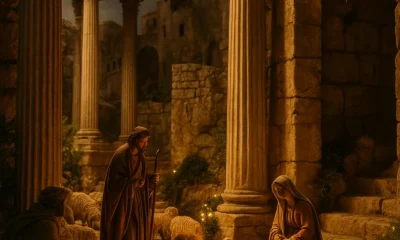
The Christmas season has officially begun in Vera with the inauguration of its Vera Nativity Scene 2025, a cultural tradition that attracts residents and visitors from across the region. Set inside the Convent of La Victoria, this year’s Nativity Scene offers a striking and immersive journey to ancient Rome, recreating the atmosphere of the early Imperial era during the reign of Emperor Augustus—historically linked to the birth of Jesus.
The opening ceremony was enriched by the music of the Da Music Quartet and presided over by renowned Nativity scene artist Antonio de Haro Marquez. Widely respected for his artistry, dedication to the craft and contribution to cultural heritage, he recently received the Spanish Federation of Nativity Scene Makers Trophy at the 61st National Nativity Scene Congress. He was joined by the Mayor of Vera, Alfonso Garcia Ramos, and the Councilor for Culture and Heritage, Antonio Jesus Soler Castano, who highlighted the importance of this tradition for the cultural identity of the municipality.
The construction of this year’s Nativity Scene has once again relied on the collaboration of the “Friends of the Vera Nativity Scene” Association, with lighting and 3D effects designed by Francis Sanchez Morata. According to the Ayuntamiento de Vera, the 2025 edition continues the town’s commitment to preserving a tradition deeply rooted in local heritage while also offering an evolving artistic experience each Christmas season.
A Journey Into Ancient Rome
The Monumental Nativity Scene 2025 stands out for its detailed reconstruction of ancient Rome. Visitors enter a visual narrative where elements of imperial grandeur coexist with everyday life and the humble origins of Christianity. Towering columns, lush gardens, stone pathways and architectural motifs recreate the setting of the Roman Empire in full splendor. These scenes contrast sharply with the modest depiction of the birth of Jesus, underscoring the difference between imperial power and the simplicity of the Holy Family.
The design intentionally alternates between moments of political power and scenes of ordinary life. Shepherds, craftsmen and families appear alongside ruins, market squares and symbolic landscapes. At the center of the display stands a cascading waterfall, symbolizing purity, renewal and the strength of life even in difficult times. Every corner reveals handcrafted figures, intricate textures and small details that invite visitors to pause, observe and reflect. As one of the most visited Vera Nativity Scene exhibitions in recent years, it continues to blend artistic creativity with cultural heritage.
Among the most striking scenes is the depiction of the Massacre of the Innocents, where Herod is presented as a ruler whose fear manifests in violence. This dramatic scene contrasts with quieter spaces that show daily Roman life, creating a rhythm that blends storytelling, history and devotion.
An Artistic, Cultural and Spiritual Dialogue
During the inauguration, Antonio de Haro Marquez described the Nativity Scene as more than a display. To him, it is a creative and emotional journey that invites visitors to reconnect with values of humility, hope and renewal. He explained that the experience is not only artistic but also reflective, offering people a way to understand and appreciate a moment in history that continues to shape cultural and spiritual traditions.
His words resonated with the audience, particularly when he reflected on how each corner of the Nativity Scene carries a message. Some scenes invite contemplation, others narrate familiar biblical events, and many encourage visitors to share stories, emotions and curiosity with children—keeping traditions alive through generations.
The opening address, delivered by Olivier Garcia Rodriguez, reinforced this perspective. He described the Nativity Scene as a “seed” capable of nurturing tenderness, faith and love in the hearts of children. His speech emphasized that Christmas should be understood as a space of gratitude, connection and hope, echoing longstanding cultural expressions of the season.
The exhibition also draws inspiration from a text traditionally attributed to Chilean poet Gabriela Mistral, framing Christmas as a symbol of new beginnings: “Christmas is love, hope, joy, redemption and renewal,” he noted. The Nativity Scene, with its artistic richness, seeks to convey these values through visual storytelling that invites visitors to reflect on the meaning of the season.
A Cultural Treasure Open to All
Mayor Alfonso Garcia Ramos highlighted the significance of the Monumental Nativity Scene for Vera’s identity. Every year, the exhibition becomes a focal point of the local Christmas calendar, drawing thousands of visitors who admire the craftsmanship, creativity and dedication behind each figure and scene. The mayor emphasized that the Nativity Scene is a cultural legacy shared by generations, representing community, spirituality and artistic excellence.
In addition to the main display, visitors can explore the extensive collection of Nativity scenes from around the world housed at the Convent of La Victoria. Comprising more than 800 pieces, this collection was generously donated by the family of Maria del Carmen Morant Belda. It adds an invaluable layer of cultural and historical richness, showcasing different artistic interpretations of the Nativity from various countries, eras and styles.
The Monumental Nativity Scene 2025 will remain open until January 11th, giving residents and visitors ample time to enjoy this unique artistic experience. With its blend of historical accuracy, artistic creativity and emotional depth, it stands as one of Vera’s most cherished Christmas traditions.
For more stories and local highlights from towns across the province, visit our Towns & Villages section.
Towns & Villages
Christmas in Mojacar
Published November 29, 2025 | Category: Events
TL;DR: Christmas in Mojacar blends traditional Spanish festivities with Mediterranean charm, offering warm lights, local markets and a festive atmosphere across both Mojacar Pueblo and Mojacar Playa.
Christmas in Mojacar
Christmas in Mojacar is a unique experience. The blend of whitewashed streets, Mediterranean views and Andalusian traditions creates a festive season unlike anywhere else on the Levante coast. Whether you are a resident, winter visitor or planning a December holiday, Mojacar offers a warm, welcoming and atmospheric Christmas with lights, music and community events throughout December and early January.
This guide gives you an overview of what Christmas typically feels like in Mojacar—its traditions, decorations, festive activities and the best ways to enjoy both the old town and the beach area during the holiday season.
Christmas Lights and Atmosphere
Mojacar Pueblo and Mojacar Playa each have their own character during the Christmas period. The Pueblo, with its narrow streets and white houses, becomes especially picturesque when the Christmas lights are switched on. The decorations typically focus on warm colours, star motifs and village squares illuminated with traditional Andalusian designs.
Down in Mojacar Playa, the atmosphere is more open and coastal, with festive lighting along the main route and around commercial areas. While the town does not have the large-scale displays seen in major cities, the charm lies in its simplicity and the contrast between sea views and Christmas colour.
Festive Traditions in Mojacar
The festive season in Mojacar follows classic Spanish Christmas traditions. Typical elements include nativity scenes (belenes), local markets, children’s activities and musical performances. Community groups, cultural schools and local associations often organise small concerts, dance shows and family-friendly workshops.
Throughout December and early January, you will usually find:
- Local Christmas markets
- Music and dance performances
- Nativity displays in public buildings
- Family activities and children’s entertainment
- Festive menus in restaurants and beach bars
Although the programme changes each year, the overall feeling remains the same: a warm, community-driven celebration with plenty of activities for families, residents and winter visitors.
Mojacar Pueblo: The Heart of the Celebrations
Mojacar Pueblo is the centre of many seasonal traditions. Its elevated position gives stunning views over the coast at sunset, especially during the festive season when the village is lit up and decorated. The main square and surrounding streets often host official ceremonies, concerts and community events organised by the town hall.
The Pueblo is also where you will find artisan shops, small winter markets and traditional Spanish pastries—ideal for enjoying after an evening stroll through the illuminated streets.
Mojacar Playa: Coastal Lights and Winter Walks
While Mojacar Pueblo is more traditional, Mojacar Playa offers a relaxed coastal take on Christmas. The beachfront promenade, although quieter in winter, becomes pleasantly festive with lights and decorated areas around shopping zones and restaurants.
Beach bars and restaurants often host their own seasonal events, offering special menus, Christmas dinners and New Year’s gatherings. For many winter visitors, Mojacar Playa is the ideal place for a peaceful December break with mild temperatures and long walks along the coast.
Getting Around: Buses and Access
Mojacar is well-connected between the Pueblo and Playa thanks to regular bus services, which are often reinforced during major seasonal events. Although schedules change each year, residents and visitors can usually expect additional services on days with large activities, such as the Christmas lights switch-on or major concerts.
Parking can be more limited in the Pueblo during December events, so using the bus is often recommended—especially for the Christmas period.
Weather in December
One of the biggest advantages of spending Christmas in Mojacar is the weather. December is mild compared to the rest of Europe, with daytime temperatures generally between 14°C and 20°C. Clear winter skies and gentle sunshine make outdoor walks, viewpoints and terrace dining especially enjoyable.
Where to Stay
Mojacar offers a mix of accommodation options during winter, including beach hotels, aparthotels, rural stays and rentals in the Pueblo. Because December is a quieter month, many properties offer attractive winter rates. Whether you prefer sea views or the charm of the old town, there is usually something for every style and budget.
Annual Christmas Activities in Mojacar
Each winter, Mojacar offers a seasonal programme of Christmas activities that typically includes concerts, children’s workshops, festive markets and community events in both the Pueblo and Playa areas. While the exact schedule changes every year, the town usually announces its full programme as December approaches.
For more seasonal guides and local events across the province, visit our Events section.
Events
Mojácar Christmas 2025: Disney Day & Official Lights Switch-On
Published November 27, 2025 | Category: Events
TL;DR: Mojácar Christmas 2025 begins on 29 November with Disney Day, a themed concert, family workshops and the official Christmas lights switch-on led by local children.
Mojácar Christmas 2025: Disney Day and Lights Switch-On Launch the Festive Season
Mojácar Christmas 2025 officially begins on 29 November with a full day of celebrations, led by the Disney Party, the themed concert by the Mojácar Municipal Band and the traditional Christmas lights switch-on. As every year, the programme brings music, family activities, decorations and festive atmosphere to both Mojácar Pueblo and the coastal area.
From 12:00 noon, Mojácar Pueblo will be transformed with themed decorations, Disney figures, photo backdrops and ambient music. Children’s workshops, games and activities will be spread across several plazas, offering families a full day of entertainment in the old town.
A food-truck zone will remain open throughout the afternoon, offering a wide range of street-food options. Families and visitors can explore the town, enjoy the decorations and take advantage of the festive atmosphere created specifically for the start of the Christmas season.
At 5:30 p.m., the Mojácar Municipal Band will perform a special Disney Concert, joined by several local singers. The ensemble will play a selection of well-known melodies from the Disney repertoire, a performance that has become one of the most popular early-winter traditions in the town.
Immediately after the concert, the long-awaited moment arrives: the official Christmas Lights Switch-On. Following tradition, the honour of pressing the button will go to the children of Mojácar, symbolically lighting up the town and marking the start of Christmas.
A December full of culture and traditions
The lighting ceremony also inaugurates a wider festive programme scheduled throughout December. One of the most popular events will once again be the traditional Flamenco Zambomba, which brings flamenco rhythms and Christmas carols to the streets of Mojácar and has become a beloved cultural highlight.
The calendar also includes concerts, guided tours, nativity scenes, children’s activities, local initiatives and cultural workshops aimed at visitors and residents of all ages. Together, these events reinforce Mojácar Christmas 2025 as one of the town’s most anticipated periods of the year.
Statements from Mojácar’s Town Hall
The Mayor of Mojácar, Francisco García, expressed his enthusiasm for the festivities: “Disney Day has become a moment to experience Mojácar as a whole. It’s a day to enjoy our streets, our music and, above all, the excitement of the children, who will be the ones to light up Christmas.”
The Councillor for Tourism, María Gracia Alarcón, highlighted the programme’s growing appeal: “Every year we see more visitors during this period. Events like the Disney Party, the Zambomba and the lights switch-on make Mojácar a cultural and family-friendly destination.”
The Councillor for Festivities, Pascual Artero, added: “We have prepared a complete and participative programme full of special moments. The Municipal Band will once again play a central role in the Disney Concert prior to the lighting ceremony.”
Transport and logistics reinforcement
Due to the expected increase in attendance, public transport services between Mojácar Playa and Mojácar Pueblo have been reinforced. The Town Hall encourages residents and visitors to use public transport to avoid congestion and enjoy the event more comfortably.
This initiative aims to ensure that mobility during Mojácar Christmas 2025 remains smooth and accessible for families, tourists and local residents alike.
Official event details and updates are available on the Ayuntamiento de Mojácar website.
For more events across the province, visit our Events category.
Travel Tips
Tabernas Officially Named One Of Spain’s New Magical Towns
Published November 18, 2025 | Category: Towns & Villages
TL;DR: Tabernas has officially been named one of Spain’s new “Magical Towns” for 2026 — recognised for its desert landscapes, cinema heritage, cultural traditions and unique identity within inland Almería.
Tabernas becomes one of Spain’s new “Magical Towns”
Tabernas, long known for its desert scenery and movie history, has been formally incorporated into the 2026 Pueblos Mágicos de España network. This national programme includes over 171 towns distinguished for their authenticity, natural and cultural value, and ability to offer visitors meaningful, memorable experiences. With this recognition, Tabernas joins the growing list of inland destinations gaining prominence within Spain’s tourism landscape.
Why Tabernas was selected
The Town Council spent several months preparing its nomination, presenting a broad range of strengths: the Tabernas Desert, unique in Europe; its historic architecture, including the parish church and medieval castle; a growing range of rural accommodations; its gastronomy; and the traditions that shape its cultural identity. According to Mayor José Díaz, the distinction “is a strategic boost that positions Tabernas as a unique national destination.”
He highlighted that visitors discover far more than a desert: “They discover hospitality, festivals, culture, and a tourism offer that we continue expanding thanks to the joint effort of the local business community and residents.”
A short history of Tabernas
Tabernas sits in a landscape inhabited since prehistoric times. Archaeological evidence around Terrera Ventura points to Bronze Age settlements, and later Roman and Islamic periods left a visible footprint in the surrounding valleys. During Muslim rule, the position of Tabernas made it strategically valuable, and its hilltop castle served as a defensive point overseeing routes between the coast and inland Granada.
Following the Christian Reconquista, Tabernas developed as a small agricultural centre surrounded by terraced orchards and traditional irrigation channels. In the 20th century, the town became internationally known when film studios chose the desert as the backdrop for more than 300 productions — from spaghetti westerns to international blockbusters. This cinematic legacy still drives a large part of its tourist appeal.
Where the name “Tabernas” comes from
The name Tabernas is widely believed to derive from the Latin tabernae, meaning “inns” or “roadside shelters.” During the Roman period, the area lay on an important inland corridor linking the Mediterranean coast with the Guadix plateau, and resting points for travellers were common. Over centuries, the word evolved into Tabernas, retaining its association with routes, travellers and exchange — a fitting origin for a place shaped by movement, trade and frontier landscapes.
The Tabernas Desert — A unique landscape in Europe
The Desierto de Tabernas is one of the town’s greatest assets. Declared a Natural Area, it is considered the only true semi-arid desert on the European continent. Its terrain — marked by badlands, canyons, dry riverbeds and sculpted hills — has inspired filmmakers, naturalists and photographers for decades.
The desert’s combination of silence, vastness and otherworldly geology is one of the reasons Tabernas has become a reference point for sustainable, nature-based tourism. Visitors often pair the town with hikes, 4×4 routes, birdwatching or visits to film sets located a short distance from the centre.
What joining “Magical Towns” means for Tabernas
Inclusion in the Pueblos Mágicos network is more than an honorary title. It brings tangible benefits:
- National promotional campaigns across tourism channels
- Inclusion in official visitor catalogues and thematic routes
- A “tourist passport” allowing travellers to collect stamps from each Magical Town
- Increased visibility for local accommodations, restaurants and small businesses
- Support for new investment and sustainable rural development projects
For Almería province, Tabernas’ incorporation reinforces the importance of inland destinations traditionally overshadowed by coastal tourism.
Culture, gastronomy & local traditions
Although often associated with its desert, Tabernas has a strong cultural identity shaped by centuries of rural life. The town celebrates traditional festivals with processions, open-air music and gastronomy rooted in local products.
Local cuisine includes migas almerienses, carne en salsa, almond-based pastries and dishes influenced by both Mediterranean and inland mountain flavours. Bars and family-run restaurants offer tapas that reflect seasonal produce and long-standing culinary habits.
Nature & walking routes around Tabernas
The municipality manages several signposted trails suitable for all levels. Popular routes include:
- Rambla de Tabernas — A gentle walk through the desert’s dry riverbeds, ideal for photography and geological observation.
- Castillo de Tabernas hike — A short climb offering panoramic views of the town and badlands.
- Ruta de los Westerns — A thematic trail connecting filming locations and historic viewpoints.
These routes are promoted by the Town Hall and form part of ongoing efforts to develop sustainable outdoor tourism.
The philosophy behind “Magical Towns”
The organisation describes its towns as “gems” — not found in crowded tourist circuits but in places that preserve identity and authenticity. The project aims to encourage tourism that respects the land, protects heritage and strengthens local communities.
22 new towns join the 2026 network
Tabernas is one of 22 new municipalities incorporated into the network for 2026. Ranging from islands to mountain valleys, these towns represent a mosaic of landscapes and traditions that enrich Spain’s rural tourism offer. For Tabernas, the distinction serves as recognition of its natural uniqueness and growing role as a cultural and nature-based destination.
Official source
For more information, visit the official organisation: pueblosmagicos.es
Planning more inland discoveries? Visit our guide: Most Beautiful Villages in Almería.

Vera Nativity Scene 2025: A Monumental Journey to Ancient Rome

Almeria Weather Today: Cool Start, Mild Afternoon Across Province

Albox Consumer Voucher: €50,000 in Discounts for Christmas Shopping

Thousands Gather as Mojacar Switches On Its Christmas Lights

Junta Improves Road Safety on the A-334 R4 Through Zurgena

Las Norias Welcomes Christmas with Its Traditional Festive Market

Blanco Macael Marble Moves Toward EU PGI Status, Protecting Almeria’s White Gold

Snow in Almeria: Calar Alto Turns White as Rain Reaches Much of the Province

Christmas in Mojacar

Burger King Vera Playa Opens This December

Albox Consumer Voucher: €50,000 in Discounts for Christmas Shopping
Published December 1, 2025 | Category: Real Estate & Economy TL;DR: Albox has launched the second edition of its Albox...

Blanco Macael Marble Moves Toward EU PGI Status, Protecting Almeria’s White Gold
Published December 1, 2025 | Category: Real Estate & Economy TL;DR: Macael marble, long celebrated as Almeria’s “white gold,” is...


Murcia–Almería High-Speed Rail: €9.6 Million in New Funding
Published November 27, 2025 | Category: Infrastructure TL;DR: Spain has approved €9.6 million in new supply contracts for the Murcia–Almería...


Mojacar Bypass Soon a Reality: Coastal Variant to Boost Mobility and Local Economy
Published November 2025 | Category: Real Estate & Economy TL;DR: The long-awaited Mojacar bypass (“Variante Costera”) is progressing steadily and...
Vera Nativity Scene 2025: A Monumental Journey to Ancient Rome
Published December 2, 2025 | Category: Towns & Villages TL;DR: Vera has inaugurated its Monumental Nativity Scene 2025 at the...
Christmas in Mojacar
Published November 29, 2025 | Category: Events TL;DR: Christmas in Mojacar blends traditional Spanish festivities with Mediterranean charm, offering warm...

Mojácar Christmas 2025: Disney Day & Official Lights Switch-On
Published November 27, 2025 | Category: Events TL;DR: Mojácar Christmas 2025 begins on 29 November with Disney Day, a themed...


Tabernas Officially Named One Of Spain’s New Magical Towns
Published November 18, 2025 | Category: Towns & Villages TL;DR: Tabernas has officially been named one of Spain’s new “Magical...
-
Infrastructure6 days ago
Murcia–Almería High-Speed Rail: €9.6 Million in New Funding
-
Events6 days ago
Mojácar Christmas 2025: Disney Day & Official Lights Switch-On
-

 Events5 days ago
Terreros Slalom 2025: 35 Drivers Compete in a Key Andalusian Championship Round
-

 Community5 days ago
Disney in Almeria: The Forgotten Story of the Park That Almost Happened
-
Towns & Villages1 day ago
Vera Nativity Scene 2025: A Monumental Journey to Ancient Rome
-

 Expats & Living6 days ago
Embargos Bestiales Antas – Affordable Furniture and Home Goods in Almería