
Towns & Villages
Alhama de Almeria Guide. Thermal Springs, History & Valley Life
Published October 23, 2025 | Category: Travel Tips
TL;DR: Alhama de Almeria is a historic thermal-spring village in the lower Andarax valley, set between the Sierra de Gador and Sierra Alhamilla — a calm base for easy walks, spa time and authentic inland life.
Discover Alhama de Almeria — Thermal Springs, History & Valley Life
Table of Contents
- Introduction
- History & Heritage
- Nature & Walking Trails
- Thermal Springs & Wellbeing
- Culture & Local Life
- Gastronomy
- Festivals & Events
- Getting There & Accommodation
- Itineraries & Day Trips
- Practical Information
Introduction: Valley town between two mountain chains
Set in the fertile lower Andarax valley, Alhama de Almeria sits where citrus and olive groves spread between the Sierra de Gador to the west and the Sierra Alhamilla to the east. The municipality keeps an active town hall and services while retaining a small-town rhythm — white façades, a compact center and green huertas irrigated by historic channels. For official contacts and notices, consult the Ayuntamiento de Alhama de Almeria.
History & Heritage
Alhama’s name links to “thermal waters,” and the village has long been known for its hot springs and as a strategic valley settlement. The wider municipality preserves Copper-Age and protohistoric remains — including megalithic necropolises and fortified sites — and later civil heritage such as the neoclassical bridge known as La Puente and the 19th-century spa building itself.
Strolling the historic core reveals terraced lanes, the parish church and houses that still trace water-wise urbanism. Heritage information is periodically published via regional inventories and the town hall channels; for statistical and cartographic context, see the Junta’s SIMA municipal fiche.
Nature & Walking Trails
The river Andarax creates a ribbon of green habitat through otherwise semi-arid foothills. From town you can take flat riverside loops along farm tracks and poplar stands, or climb low ridges for views to Gador and Alhamilla. The valley’s microclimate offers mild winters and dry summers; spring and autumn are prime for easy hikes and cycling between villages.
A classic half-day combines a gentle walk among orchards, a viewpoint at golden hour and a relaxed tapas stop back in the center. Longer day routes link neighboring Andarax villages by quiet lanes and farm roads. (Always carry water and sun protection.)
Thermal Springs & Wellbeing
Alhama’s signature is its historic spa tradition. The Balneario San Nicolás (Hotel-Spa) sits by the valley at the base of Sierra de Gador and channels natural mineral-medicinal waters — a tradition documented for centuries and housed in the 19th-century complex you see today. For treatments, day access and seasonal opening details, consult the official spa site: Balneario San Nicolás.
Culture & Local Life
Daily life runs on valley time: morning errands, a chat in the plaza, irrigation turns in the huerta and long lunches. As a service hub for nearby hamlets, Alhama concentrates cultural programming and admin services; the Diputación de Almería SAT office in Alhama also supports surrounding municipalities.
Expect small exhibitions, sports, and summer cinema — often coordinated at provincial level by the Diputación — alongside local fiestas around the parish calendar. For municipal announcements, use the town hall’s electronic noticeboard (sede electrónica).
Gastronomy — citrus, olive oil & comfort dishes
Menus lean on valley produce and Almerian comfort food: migas on cooler days; olla de trigo and stews; fresh salads with citrus; almonds in pastries and roscos. Bars serve a straightforward menú del día at lunch; local olive oil and seasonal fruit star across the table. In the evening, terraces fill for tapas as the heat drops.
Festivals & Events
Alhama de Almeria keeps a compact but lively calendar of village festivities tied to the parish and summer season. Exact dates can vary each year; check the town hall and provincial listings for confirmations.
For a province-wide overview of upcoming festivities and public holidays, check the official Almeria Local Holidays 2026 calendar, which includes all major events across the region.
Mercadillo de Alhama de Almeria
If you’re visiting Alhama de Almeria on a Friday, you’ll find one of the most vibrant local markets in the Andarax valley. The Mercadillo de Alhama de Almeria is a traditional general market set around the Plaza de España, where residents and visitors mingle among colourful stalls filled with fresh produce, clothing, and household goods.
| Details | Information |
|---|---|
| Market name | Mercadillo de Alhama de Almeria |
| Market day | Friday |
| Type | General goods market |
| Location | Plaza de España, Alhama de Almeria |
| Opening hours | 09:00 – 14:00 |
| Number of stalls | Around 50 |
This market offers a friendly, authentic atmosphere that captures the rhythm of everyday life in Alhama — perfect for browsing local produce, tasting seasonal fruit, and experiencing the social heart of the valley.
Getting There & Accommodation
By car: Around 25–30 minutes from Almeria city via the A-7/A-92 corridors and valley roads. Parking is straightforward in and around the center; during fiestas, use peripheral streets.
Public transport: Regional buses serve the Andarax corridor with limited frequency — plan ahead.
Accommodation: Options include rural apartments and small guesthouses; spa-focused stays center on the Balneario San Nicolás.
Itineraries & Day Trips
- One Perfect Day: Morning riverside loop → coffee in the plaza → spa session at San Nicolás → sunset viewpoint on low ridges west of town → tapas crawl back in the center.
- Valley & Desert Contrast: Combine Alhama’s green corridor with an afternoon in the Tabernas desert film locations; return for dinner in the village.
- Water & Mountains: Follow the Andarax downstream one day; the next, head into the Sierra de Gador/Alhamilla for short ridge walks and photography.
Practical Information
- Region: Lower Andarax valley, between Sierra de Gador and Sierra Alhamilla.
- Municipal info: Ayuntamiento de Alhama de Almeria (contacts, notices, services).
- Stats & map: Junta de Andalucía SIMA municipal fiche for Alhama de Almería.
- Thermal spa: Balneario San Nicolás — treatments, opening info, bookings.
- Emergency numbers (Spain): 112 (General) · 061 (Medical) · 062 (Guardia Civil) · 085 (Fire)
For more inland destinations across the province, browse our Towns & Villages category and check Travel Tips for route ideas and practical advice.
Towns & Villages
Uleila del Campo guide. Discover Uleila del Campo
Published January 8, 2026 | Category: Towns & Villages
TL;DR: Uleila del Campo is a working inland village, not a tourist showpiece. Outside winter there’s little reason to stop. In January–February it becomes useful for almond blossom landscapes and wide views from the Monteagud — not for pretty streets or café life.
Uleila del Campo is the almond workhorse of inland Almeria, not a postcard village
If you arrive in Uleila del Campo expecting a polished old quarter, boutique cafés or a rewarding village walk, you will probably feel underwhelmed. This is not a place that tries to impress visitors. It exists to function, not to charm.
Uleila earns its place almost entirely in winter. In January and February, the countryside around the village does the heavy lifting: almond blossom, open views and space. On a quiet weekday afternoon, the village itself can feel close to dormant — but step outside it, and the landscape suddenly justifies the stop.
Table of contents
- Overview and location
- What Uleila del Campo feels like
- Almond blossom season: why winter is the moment
- Monteagud and the hilltop sanctuary
- Local food: what people actually eat here
- The “oil & almonds” stop: what to do here
- Parking and navigation: avoid the common mistake
- Is there a market?
- Nearby ideas for a fuller day out
- Festivals and local events
- Campers, motorhomes and caravans
- Practical information
- Who is Uleila del Campo for?
Overview and location
Uleila del Campo sits inland, well outside the coastal tourism loop. It works best as a base village: somewhere you arrive with a plan, use efficiently, and leave again. Wandering without purpose rarely pays off here.
In winter, that blunt practicality becomes an advantage. Quiet roads, open land and low expectations combine into something surprisingly effective — provided you know what you came for.
What Uleila del Campo feels like
Uleila feels functional. Not atmospheric, not curated, not particularly inviting. On many days it feels like very little is happening — because very little is.
The common mistake is treating it like a village meant to be explored on foot. It isn’t. Uleila works when you face outward: towards the fields, the roads and the hill above town. Expect anything else and you’ll leave confused rather than impressed.
Almond blossom season: why winter is the moment
Winter is the only time Uleila genuinely stands out. In January and February, the surrounding countryside fills with almond blossom — wide, open and largely uncurated.
There is no defined route, no scenic circuit and no attempt to package it. That’s the point. Use Uleila as a base, drive the surrounding roads, stop selectively, and ignore the village centre while the landscape does the work.
Reality check: If it’s not winter, most visitors would simply drive through.
Monteagud and the hilltop sanctuary
You cannot talk about Uleila without mentioning Monteagud. The hill above the village is the real reason people remember this place.
At the top sits the sanctuary of the Virgen de la Cabeza. Whether it’s open or not is largely irrelevant. The value is the view: wide, exposed and unapologetically inland.
The drive up is steep and exposed in places. If you’re uncomfortable with heights or narrow roads, this may not be a pleasant climb.
Drive up, park near the top and walk the final stretch. Don’t plan around visiting the building. Plan around standing still for a moment and understanding the scale of the landscape.
Local food: what people actually eat here
This is not tapas country. Local food in Uleila is built to sustain work, not to entertain visitors.
Expect heavy, practical dishes that make sense after a cold morning outdoors:
- Migas, usually served with whatever is available rather than plated for effect.
- Pucheros in various forms — filling, slow and unpretentious.
- Rabbit and chicken fritadas and seasonal gachas, depending on the time of year.
- Local baking that exists because people still make it, not because anyone markets it.
If you want one dish that signals “inland Almeria” without explanation, gurullos con caza does the job.
The “oil & almonds” stop: what to do here
There is no café culture to speak of. The practical move is to treat Uleila as a supply stop.
Buy almonds. Buy olive oil. Put them in the boot and move on. That’s not a failure of tourism — it’s the village doing exactly what it has always done.
Parking and navigation: avoid the common mistake
Navigation apps regularly send visitors into narrow streets where nothing good happens.
Park on Calle Almeria, walk what you need to walk, and don’t attempt to “get closer” by car. You won’t.
Do this, not that: Park once, walk briefly, leave calmly.
Is there a market?
No. If a weekly market is the main reason you stop somewhere, this is the wrong village.
Nearby ideas for a fuller day out
If you want a village that rewards wandering or casual eating out, Uleila is not it. Many visitors pair it with a nearby town that offers a more walkable centre, then use Uleila purely for landscape and views.
Festivals and local events
Uleila’s calendar matters most to locals, not visitors. September is the only period that significantly changes the feel of the village.
- Santo Cristo de las Penas (September): the main patron fiestas, busy, loud and locally important.
- Romerías to Monteagud: religious and traditional rather than touristic.
- Summer return events: more about family reunions than spectacle.
Campers, motorhomes and caravans
This is not a camper-friendly village. Access is limited and improvisation is discouraged.
Practical information
- Best time to visit: January–February.
- Main draw: landscape, not the village.
- Parking: Calle Almeria.
Who is Uleila del Campo for?
This village works if:
- You value landscape over atmosphere.
- You don’t need entertainment built in.
- You understand that some places are useful, not charming.
It won’t work if:
- You expect a rewarding village walk.
- You plan to “see what happens.”
For official municipal information, local announcements and administrative updates, consult the town hall website of Uleila del Campo: uleiladelcampo.es.
More guides like this live in the Towns & Villages section.
Towns & Villages
Lucainena de las Torres guide. Discover Lucainena de las Torres
Published January 8, 2026 | Category: Towns & Villages
TL;DR: Lucainena de las Torres is a small, well-kept village in inland Almeria, best known for its white streets, flower-filled facades and the flat Vía Verde walking route. It works best as a calm stop combined with walking, lunch and nearby villages rather than a full-day destination.
Lucainena de las Torres is a village where slowing down is the point
Lucainena de las Torres is one of those villages people tend to agree on immediately: it looks good. Whitewashed houses, clean streets, flowers on the walls, and a sense that someone here actually cares about how the place presents itself. Set against the lower slopes of the Filabres mountains, the village opens up quickly to wide inland views.
This is not a place full of attractions or activities. Lucainena works because it is compact, calm and easy to read. You don’t rush through it — you arrive, park, walk, sit down, and only then decide what comes next.
Lucainena de las Torres at a glance
- Province: Almeria
- Setting: Inland, Filabres foothills
- Known for: White village, Vía Verde, industrial heritage
- Best for: Short walks, lunch stops, calm village atmosphere
- Not ideal for: Nightlife, shopping, full-day sightseeing
Table of contents
- Overview and location
- A brief history and the Hornos
- The Vía Verde de Lucainena
- Food and drink: what to expect
- Lucainena and the almond blossom season
- How to visit Lucainena without stress
- Market day in Lucainena de las Torres
- Town hall and local information
- Campers, motorhomes and caravans
- Festivals and local events
- Who is Lucainena for?
- Practical information
Overview and location
Lucainena de las Torres lies in inland Almeria, north of Nijar and west of Sorbas, in a landscape that feels distinctly different from the coast. The village is small and clearly structured, with most points of interest within a short walking distance.
Because of its size and layout, Lucainena is easy to combine with nearby villages or outdoor routes. Many visitors stop here while driving between Sorbas, Uleila del Campo or the Filabres foothills.
A brief history and the Hornos de Calcinación
Lucainena was not always a postcard-perfect white village. Its character was shaped by mining and industry, something that becomes immediately visible at the edge of the village.
The Hornos de Calcinación — eight large stone kilns once used to process iron ore — stand just outside the centre. They are visually striking, rough and industrial, and form an open-air reminder of Lucainena’s working past.
You don’t need a museum ticket or guided visit here. Walking among the ovens is enough to understand that this village was built on labour, not tourism.
The Vía Verde de Lucainena
The Vía Verde de Lucainena is the village’s main draw. This former railway line has been converted into a wide, flat walking and cycling path that starts just outside the village near the Hornos.
What makes this route special in the Filabres area is its accessibility. Unlike most inland walks, this path is almost completely flat. It’s ideal for visitors who want fresh air and views without steep climbs or technical terrain.
You can walk a short section and turn back, or combine it with lunch in the village. It’s “walking without sweating”, which is surprisingly rare in this part of Almeria.
Food and drink: what to expect
Lucainena has limited horeca, and it’s important to be realistic about that. You won’t find rows of restaurants or cafés.
Mesón La Fuente, located near the main square, is the most reliable option. It’s a good place for coffee, a simple lunch or a drink on the terrace, and it gives you a clear sense of local village life without feeling touristy.
If Mesón La Fuente is closed or busy, options are scarce. In that case, it often makes more sense to continue to Sorbas or another nearby village rather than searching aimlessly.
Lucainena and the almond blossom season
In late January and February, Lucainena sits within one of inland Almeria’s almond blossom areas. While the village itself is not surrounded by the largest fields, the surrounding roads offer some of the most scenic blossom drives in the region.
The routes towards Turrillas and the wider Filabres-Alhamilla area are especially attractive during this period, making Lucainena a logical stop along the almond blossom routes. (If you are visiting in these months, it’s worth reading the full guide to the routes and timing.)
How to visit Lucainena without stress
Parking advice: Park at the large parking area near the Hornos de Calcinación and the start of the Vía Verde. Do not try to drive into the village centre unless you enjoy tight corners and scratched hire cars.
A simple and effective visit looks like this:
- Park near the Hornos
- Walk through the village towards the main square
- Have a drink or lunch
- Walk a section of the Vía Verde
- Continue by car towards Sorbas, Uleila del Campo or the Filabres area
Market day in Lucainena de las Torres
Lucainena de las Torres does not have a weekly street market. There are no regular market stalls or market days in the village itself.
For a broader market experience, visitors usually head to larger nearby towns such as Sorbas or Nijar, where weekly markets offer fresh produce, clothing and household goods.
Town hall and local information
For official information about local services, events and municipal matters, the main reference point is the town hall.
Ayuntamiento de Lucainena de las Torres: Official municipal website (the site uses http rather than https, but it is the official and safe municipal website).
Note: The official municipal website uses http rather than https. That’s common on smaller town hall sites. It is still the official domain, but as a general rule, avoid entering sensitive personal or payment information on non-https pages.
Campers, motorhomes and caravans
Lucainena de las Torres is not a dedicated motorhome destination, and there is no official camper area in the village.
Overnight parking for campers or motorhomes is not clearly regulated within the village, and the narrow streets make access with larger vehicles impractical. If you arrive with a motorhome, park outside the village where space allows, respect signage, and keep a low profile.
If you want proper facilities (services, designated spaces), it is usually better to base yourself in a better-equipped area and visit Lucainena as a day stop.
Festivals and local events
Small villages like Lucainena may have local fiestas and cultural events that change year to year. For planning purposes, always check municipal announcements and local holiday calendars.
If you’re travelling around public holidays (when shops and services can close), it helps to cross-check dates across the province here: Almeria local holidays.
Who is Lucainena for?
- Good fit for: walkers, photographers, slow travellers, winter visitors, day trippers from the coast
- Less suited for: nightlife seekers, shopping-focused trips, families looking for constant activities
Practical information
- Parking: Free parking near the Hornos and Vía Verde
- Facilities: Limited shops and horeca
- Time needed: 1–3 hours, depending on walking plans
- Best combined with: Sorbas, Uleila del Campo, Filabres foothills
Looking for more honest village guides across the province? Browse our Towns & Villages section.
Towns & Villages
Cantoria guide. Discover Cantoria
Published January 6, 2026 | Category: Towns & Villages
TL;DR: Cantoria is a larger inland town in the Almanzora valley shaped by industry and work. It functions as a regional centre for services and production rather than tourism.
Cantoria is a working inland town built around stone, logistics and routine
Cantoria sits in the Almanzora valley in inland Almeria and operates at a different scale than the surrounding villages. This is not a place defined by silence or scenery, but by movement, work and infrastructure. From the first impression, it is clear that Cantoria exists to function.
The town’s development has been shaped by stone, transport and long-standing industrial activity. That history still defines how Cantoria looks, sounds and feels today. Visitors expecting a white village experience will be disoriented. Those who arrive with practical expectations will recognise the logic immediately.
Contents
- Overview and location
- History and development
- Marble, stone and the industrial economy
- What the town feels like
- Services and facilities
- Traditional food and daily eating
- Market
- Vía Verde and outdoor routes
- Access, traffic and parking
- Campers, motorhomes and caravans
- Festivals and local events
- Why stop here / why skip it
- Practical information
- Who is Cantoria for?
Overview and location
Cantoria lies along one of the main corridors of the Almanzora valley, with direct road access to industrial zones, neighbouring towns and regional routes. Its position explains much of its character: Cantoria connects places rather than isolates them.
The surrounding landscape is utilitarian rather than scenic. Industrial estates, transport routes and working farmland dominate the edges of town. This is not accidental. Cantoria grew where it could move materials efficiently.
History and development
Cantoria’s past wealth left behind a small number of stately buildings linked to 19th-century power and industry, including palatial structures associated with the Marquisate of Almanzora. These buildings speak of a time when status and architecture were tools of visibility.
Today, many of these structures stand diminished by their surroundings. Historic façades are overshadowed by modern concrete, logistics yards and industrial sheds. The contrast is not harmonious; it is jarring.
This is not a town that has balanced preservation and progress. Cantoria chose expansion and output, and the older architecture was left to coexist, uneasily, with a landscape built for efficiency. The result is not picturesque contrast but aesthetic rupture.
These buildings matter not because they beautify the town, but because they reveal what was sacrificed to get here.
Marble, stone and the industrial economy
Stone is not just part of Cantoria’s economy; it dominates the town’s physical reality. Large-scale marble and stone operations surround the settlement and define its skyline. This is not a village with an industrial zone nearby. It is an industrial landscape with a town attached to it.
The wealth of Cantoria has been built on marble, and the price is visible everywhere. Massive metal warehouses, processing halls and storage yards block views, absorb light and flatten the horizon. The aesthetic cost is not accidental; it is the direct result of prioritising production over appearance.
This is where the familiar “Almeria dream” of white villages and open views ends. In Cantoria, industry wins every negotiation. Dust, noise and constant movement are not side effects but structural features of daily life.
For those who work here, this trade-off makes sense. For anyone arriving with romantic expectations, it is a shock. Cantoria does not hide its purpose, and it does not apologise for it.
What the town feels like
Cantoria feels busy. Compared to smaller villages, there is more movement, more sound and less visual coherence. Delivery vans, trucks and private vehicles are part of the daily rhythm.
The town does not invite wandering. Streets exist to move people and goods efficiently. Public space is practical rather than performative. This can feel harsh to visitors expecting charm, but for residents it provides clarity and purpose.
Context matters: Cantoria is not trying to be charming, quiet or scenic. It is optimised for output. Judging it by village aesthetics misses the point entirely.
Services and facilities
As a regional centre, Cantoria offers a wide range of practical services. Banks, supermarkets, garages, hardware suppliers and industrial services are readily available. This is one of the reasons people from smaller surrounding towns regularly come here.
Opening hours follow working patterns. Expect morning activity and quieter afternoons. Services exist to support daily life and business, not to cater to visitors.
Cantoria is useful. That is its core advantage.
Traditional food and daily eating
Food in Cantoria reflects its working identity. Meals are built around routine, fuel and familiarity rather than experimentation.
Two local dishes you may encounter are gurullos con conejo, a thick stew made with handmade pasta pieces, rabbit and local spices, and migas, prepared with flour, olive oil and garlic, often served with peppers or sardines. These are filling, practical dishes rooted in agricultural and labour traditions.
Eating out follows local schedules. Menu del día dominates lunchtime. Evening dining is quieter and limited. This is not a food destination; it is a place where people eat to continue their day.
Market
Cantoria hosts a general market every Wednesday morning. It is one of the larger weekly markets in this part of the Almanzora valley and reflects the town’s role as a local centre rather than a visitor attraction.
| Day | Wednesday |
|---|---|
| Type | General local market |
| Location | Plaza Constitución |
| Time | 08:00 – 14:00 |
| Stalls | Approx. 40 |
The market is busy, practical and unromantic. Clothing, household goods and everyday items dominate. People come to buy what they need, not to browse or linger.
If Wednesday falls on a public holiday, the market may shrink or change without much notice. Locals adapt; visitors should remain flexible.
Vía Verde and outdoor routes
The Vía Verde passes through the Cantoria area, following a former railway corridor. On a map, it suggests leisure, cycling and nature. On the ground, the experience is very different.
This stretch of Vía Verde runs through an active industrial marble zone. It is a grey strip of asphalt bordered by warehouses, truck routes and storage areas. Calling it a nature experience would be misleading.
As infrastructure, it has limited utility: a flat, car-free route from one point to another. As an attraction, it fails. Anyone coming here for scenery or tranquillity will feel misled.
Use it only if you need to move without a car. Do not come looking for landscape or escape.
Access, traffic and parking
Cantoria is easy to reach by road and functions as a transit point. Traffic volume is higher than in surrounding villages, particularly due to industrial activity.
Parking is practical but not elegant. Central areas can feel congested, and working vehicles often dictate how space is used. Efficiency takes priority over courtesy.
Practical advice: park slightly outside the busiest zones and walk in. Cantoria moves at a working pace, not a visitor’s.
Campers, motorhomes and caravans
Cantoria is not a camper destination. It may serve as a practical stop for supplies or rest, but it offers little in terms of atmosphere or facilities for longer stays.
There are no scenic camper areas and no tolerance for camping behaviour in public spaces. Treat Cantoria as a functional pause, not a base.
Festivals and local events
Local festivals exist and are important to residents, but they are not designed as visitor attractions. During these periods, the town becomes livelier and social rhythms change temporarily.
Outside festival dates, Cantoria returns quickly to its working routine.
For province-wide public holidays, see Almeria local holidays.
Why stop here / why skip it
Why stop here:
- Reliable access to services and supplies
- Understanding the industrial heart of the Almanzora
- Practical base for work-related stays
Why skip it:
- Low visual appeal
- No tourist-focused attractions
- Busy, functional atmosphere
Practical information
- Car recommended: yes
- Best use: services, work, logistics
- Official website: Ayuntamiento de Cantoria
Who is Cantoria for?
Cantoria works for people who are here to do something. Workers in the marble industry, long-term residents with practical needs, and anyone whose priorities are access, employment and services rather than atmosphere.
It does not work for slow-travel enthusiasts, aesthetic wanderers or anyone chasing the idea of a relaxed Andalusian village. Arriving here in linen trousers and a straw hat, expecting calm and charm, means arriving completely misaligned with reality.
This is a town of forklifts, vans and shift schedules. If you are not here to work, resupply or pass through with a purpose, Cantoria will feel hostile, loud and unrewarding.
Explore more clear-eyed guides to towns and villages across the province in Towns & Villages.

Uleila del Campo guide. Discover Uleila del Campo

Lucainena de las Torres guide. Discover Lucainena de las Torres

Almond blossom routes in Almeria: villages, walks and when to go

Events in Almeria: January & February concerts, theatre and Carnaval

Albox sets out key projects for 2026 as new municipal budget takes effect

€5.4 million investment approved for new wastewater collectors in Balanegra, Berja and Dalias

Hailstorm hits Adra on Three Kings’ Day as Storm Francis brings more unstable weather

Almeria remains “frozen” as Storm Francis lingers, with frost alerts and road impacts

Antas plans cultural and walking landmark at Cabezo Maria

Rain shortens Three Kings Parade in Huércal-Overa


Almeria Housing Market Outlook 2026: Rising Prices, Slower Pace
Published December 30, 2025 | Category: Real Estate & Economy TL;DR: Almeria enters 2026 with a housing market that is...


€26 million allocated for new AVE railway station in Almeria
Published December 23, 2025 | Category: Infrastructure TL;DR: The Andalusian regional government will invest €26 million in the future AVE...


Costa de Almeria closes 2025 with strong tourism momentum ahead of FITUR 2026
Published December 23, 2025 | Category: Community TL;DR: Costa de Almeria has wrapped up 2025 with more than 70 tourism...


High-Speed Rail to Almeria Faces New Challenge After Roman Cemetery Found in Lorca
Published December 22, 2025 | Category: Infrastructure TL;DR: A late Roman cemetery discovered during AVE tunnelling works in Lorca adds...
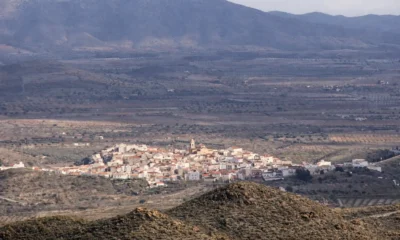
Uleila del Campo guide. Discover Uleila del Campo
Published January 8, 2026 | Category: Towns & Villages TL;DR: Uleila del Campo is a working inland village, not a...
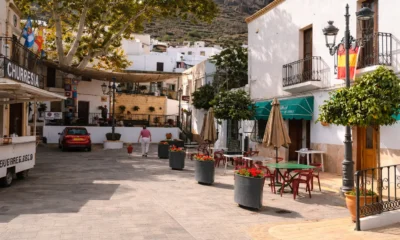
Lucainena de las Torres guide. Discover Lucainena de las Torres
Published January 8, 2026 | Category: Towns & Villages TL;DR: Lucainena de las Torres is a small, well-kept village in...
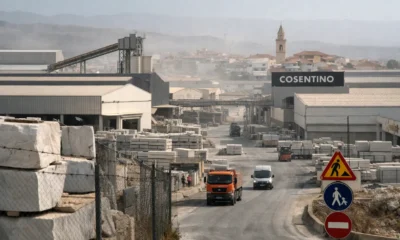

Cantoria guide. Discover Cantoria
Published January 6, 2026 | Category: Towns & Villages TL;DR: Cantoria is a larger inland town in the Almanzora valley...
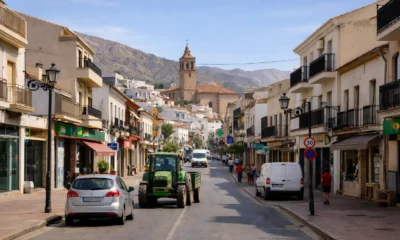

Canjayar guide. Discover Canjayar
Published January 4, 2026 | Category: Travel Tips TL;DR: Canjayar is a larger inland town in the Andarax valley with...
-
 Community4 days ago
Storm Francis brings snow to inland Almeria as yellow alert remains active
-
 Community5 days ago
AEMET activates yellow alert in Almeria as Storm Francis brings heavy rain
-

 Events6 days ago
Three Kings parades moved forward in Almeria
-
 Travel Tips6 days ago
Benahadux guide. Discover Benahadux
-

 Community6 days ago
Storm Francis brings heavy rain