
Activities & Attractions
Lubrin launches gastromining route linking mining heritage and gastronomy
Published January 3, 2026 | Category: Activities & Attractions
TL;DR: Lubrin has launched a new gastromining route that links local gastronomy with the town’s mining and geological heritage.
Lubrin connects mining heritage and gastronomy in a new inland route
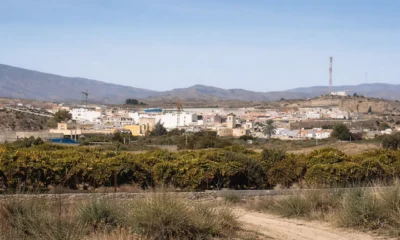
The inland municipality of Lubrin has introduced a new gastromining route that brings together two defining elements of the area: its mining and geological heritage and its traditional food culture. The initiative is designed to highlight how landscape, extraction and local cuisine have shaped the town over time.
Rather than creating a themed trail or tourist circuit, the route focuses on interpretation. It offers visitors a structured way to understand how mining activity influenced settlement patterns, land use and daily life in this part of Almeria, while anchoring that story in local gastronomy.
A route rooted in geology and history
Lubrin sits within a landscape marked by mineral extraction and geological diversity. For generations, mining shaped the economy of the area, leaving behind physical traces in the terrain as well as less visible social and cultural legacies.
The gastromining route uses this backdrop as its foundation. Geological features, former mining zones and historic sites are connected through a coherent narrative rather than isolated points of interest. The emphasis is on understanding why Lubrin looks the way it does today, and how its environment influenced both work and food.
This approach aligns closely with a broader shift in inland tourism across Almeria, where interest is moving away from volume-based visits toward context-driven experiences.
Food as cultural continuity
Gastronomy plays a central but grounded role in the route. Local dishes such as gurullos, traditionally prepared with rabbit or seasonal game, are presented not as attractions in themselves, but as part of a living tradition shaped by geography, climate and historical labour.
Mining communities required calorie-dense, practical food, often based on local produce and preservation techniques. By incorporating gastronomy into the route, Lubrin highlights how food connects past and present, offering insight into everyday life rather than restaurant culture alone.
This makes the experience particularly relevant for visitors interested in food as heritage, not just consumption.
Not mass tourism, but slow exploration
The route is clearly not designed for large groups or rapid consumption. Distances, terrain and the nature of the content favour a slower pace, suitable for walkers, small groups and independent travellers.
There are no expectations of crowds, ticketed entry points or entertainment-style staging. Instead, the route functions as an interpretive layer added to the existing landscape, allowing visitors to engage at their own rhythm.
This makes it a natural fit for inland Almeria, where scale, silence and space remain part of the appeal.
Who this route is for
The gastromining route in Lubrin will appeal most to:
- visitors interested in mining and geological heritage
- travellers seeking inland, non-coastal experiences
- walkers and slow-tourism enthusiasts
- food-minded visitors curious about local traditions
It is less suited to those looking for short, high-impact attractions or heavily signposted tourist circuits.
Local context matters
What gives this route its value is not novelty, but authentic context. Lubrin is not reinventing itself as a destination; it is articulating what is already there.
By linking mining heritage with gastronomy, the municipality reinforces a sense of place that is often lost when inland towns are reduced to viewpoints or stopovers.
For practical details, updates and local information, visitors can consult the official Lubrin town hall website: https://www.lubrin.es/.
Why this matters for inland Almeria
Initiatives like this gastromining route reflect a wider effort to diversify inland tourism without distorting local identity. Instead of importing external concepts, Lubrin builds on its own history and environment.
For the province as a whole, this approach helps distribute visitor interest beyond the coast while maintaining realism about scale and capacity.
The route does not promise transformation. It offers understanding — and for the right visitor, that is enough.
Looking for more inland routes, heritage experiences and low-impact attractions across the province? Explore our latest guides in Activities & Attractions.
Events
Costa de Almeria Rally confirmed for 2026
Published December 22, 2025 | Category: Events
TL;DR: The Costa de Almeria Rally has been officially confirmed for the 2026 season of the Spanish Asphalt Rally Championship. The 51st edition will take place on September 18 and 19, marking the event’s second consecutive year on the national calendar.
Costa de Almeria Rally confirmed for 2026
The 51st Costa de Almeria Rally has been officially confirmed as part of the Spanish Asphalt Rally Championship (CERA Recalvi) for the 2026 season. The event will be held on September 18 and 19, 2026, securing Almeria’s place on Spain’s national asphalt rally calendar for a second consecutive year.
The confirmation follows the success of the milestone 50th edition, which took place at the end of October and beginning of November 2025. That event marked the Costa de Almeria Rally’s debut as a round of the national championship and played a key role in its return for 2026.
The 2026 Spanish Asphalt Rally Championship calendar was approved during the Ordinary General Assembly of the Royal Spanish Automobile Federation, held on December 20 in Alcorcon (Madrid). The championship will consist of five events, with one round still pending confirmation.
In addition to the Costa de Almeria Rally, the confirmed events on the 2026 calendar are:
- La Llana Rally (Catalonia) – April 10–11
- Villa de Adeje Rally (Canary Islands) – May 8–9
- Costa de Almeria Rally – September 18–19
- Ciudad de Valencia Rally – November 27–28
The Almeria Automobile Club has welcomed the confirmation and has already begun preparations for the 51st edition of the rally. Organisers have highlighted the continued motivation that comes with the event’s national championship status, both for teams and for the province as a whole.
Visitors who attended the landmark 50th edition in 2025 can also explore our coverage of last year’s event, including the 50th anniversary kick-off and a detailed spectator guide.
For motorsport fans, teams and visitors, the announcement reinforces Almeria’s growing presence on Spain’s competitive rally map and confirms the Costa de Almeria Rally as one of the key asphalt events of the 2026 season.
Looking for upcoming races, festivals and things to do in Almeria? Browse more updates in our Events section.
Events
Mojacar Christmas: Festive Shop Window Competition Underway
Published December 20, 2025 | Category: Events
TL;DR: Mojacar Christmas celebrations include the town’s traditional shop window competition, where local businesses decorate their displays with festive creativity. A professional jury and public voting via Facebook will decide the winners, with cash prizes awarded in early January.
Mojacar Christmas Shop Window Competition Lights Up the Town
Mojacar embraces the Christmas season with colour, creativity and community spirit. Alongside its festive lights, family activities and seasonal events, the town is once again hosting its traditional Christmas shop window competition, encouraging local businesses to transform their displays into festive scenes.
The competition has become a familiar part of Christmas in Mojacar, adding warmth and visual charm to the streets while supporting local commerce during the holiday period.
What’s New This Year
This year’s edition stays true to the essence of previous competitions but introduces several notable updates. A professional jury will now be responsible for selecting the winning shop windows, assessing each display based on creativity, originality, decoration, lighting and overall Christmas spirit.
Public participation also plays a role. Residents and visitors can vote for their favourite displays through the Mojacar Town Hall’s official Facebook page. Votes are cast by reacting to the published photos of participating shop windows — every positive reaction, from a simple like to a love or care, counts as a vote and adds to the final score.
Key Dates and Prizes
The competition follows a clear schedule throughout the festive period:
- December 30: The professional jury visits participating businesses.
- January 6 (11:59 pm): Deadline for public voting via Facebook reactions.
- January 7: Announcement of the three winning shop windows.
Cash prizes will be awarded to the top three displays, with €500 for first place, €300 for second and €200 for third.
By combining professional judging with public involvement, the competition adds another engaging layer to Mojacar Christmas, creating a festive atmosphere that can be enjoyed while strolling through the town during the holiday season.
Want to discover more events, fiestas and things to do across the province? Browse the latest updates in our Events section.
Activities & Attractions
Alcazaba Almeria: €10 Million Restoration Marks a New Era for the Monument
Published December 9, 2025 | Category: Activities & Attractions
TL;DR: More than €10 million has been invested in the Alcazaba of Almeria since 2019, culminating in the restoration of the Torre de la Justicia. A new €4 million programme will now advance the North Wall, lighting, and security systems. This marks one of the most significant preservation efforts in the monument’s modern history.
Alcazaba Almeria: A Historic Monument Enters a New Era of Restoration
The Alcazaba Almeria is not only the emblem of the city but one of the most important Islamic fortresses in Spain. Overlooking the Bay of Almeria from its dramatic hilltop position, the complex has witnessed more than a thousand years of history — from the era of the Caliphate to Christian rule and today’s conservation efforts. Now, thanks to over €10 million in restoration work since 2019, the monument is experiencing one of the most transformative periods in its modern life.
The Junta de Andalucía has confirmed the completion of the restoration of the Torre de la Justicia, the symbolic gateway to the fortress. Funded through the European Union’s Next Generation programme, this intervention is the latest milestone in a long-term strategy to secure the Alcazaba’s future, enhance its structural integrity and improve the visitor experience across the entire site.
A Fortress With Over 1,000 Years of History
The Alcazaba was founded in the 10th century during the reign of Abd al-Rahman III, the first Caliph of Al-Andalus. Originally conceived as a military fortress, palace, administrative centre and defensive enclosure, the site expanded over centuries into three distinct walled areas. From the caliphal citadel to the Christian additions following the Reconquista, each phase left architectural layers that today form one of the most complete examples of Islamic military architecture in Europe.
Over time, exposure to the elements, humidity, structural settling and earlier restoration methods created a wide range of conservation challenges. For decades, only partial interventions were carried out — until the current multi-year programme began in 2019, aiming to stabilise, restore and reinterpret the monument for the 21st century.
Restoring the Torre de la Justicia
The newly completed restoration of the Torre de la Justicia responds to many of those long-standing issues. With a budget of €273,160, the project focused on structural consolidation, eliminating humidity problems, recovering volumes lost to erosion, and repairing historical masonry, brickwork and tapial. Outdated cement elements were removed and replaced with traditional lime-based materials, allowing the tower to breathe naturally once again.
The project, directed by architect Gerardo Francisco Úbeda Rueda, also upgraded interior installations, renewed nearby transit areas, and improved the tower’s surroundings — all while maintaining the authenticity of this historic entrance to the Alcazaba Almeria.
What €10 Million Has Achieved Across the Alcazaba
Since 2019, the conservation effort has touched almost every corner of the monument. Completed works include:
- First section of the North Wall
- Muro de la Vela
- Torre del Homenaje
- Caliphal Cistern
- Military Baths (Baños de la Tropa)
- Muralla del Cerro de San Cristóbal
- South Wall and South Tower
- Internal water supply network renovation
Together, these interventions form one of the largest coordinated restoration programmes carried out at the Alcazaba Almeria in recent memory. They strengthen its structural stability, enhance safety and accessibility, and open new possibilities for cultural use and visitor interpretation.
A New €4 Million Investment on the Horizon
The Junta de Andalucía has now announced a further €4 million for upcoming projects. These will include:
- Modernisation of the electrical and lighting systems (interior and exterior)
- Installation of new security, videovigilance and alarm systems
- Restoration of the second section of the North Wall
The basic design for the lighting and surveillance improvements is expected to be completed before the end of the year, while the restoration plan for the remaining North Wall has already been drafted and reviewed. These efforts will continue reinforcing the long-term preservation strategy of the Alcazaba Almeria.
Institutional Support and a Shared Vision for Heritage
The restoration works have been widely welcomed across provincial and local institutions. Almudena Morales, Vice President of the Provincial Council of Almeria, highlighted that the regional government has placed the Alcazaba firmly on its cultural agenda since 2019. The city’s Councillor for Urbanism, Eloísa Cabrera, also praised the progress, noting that the efforts align with other urban regeneration projects in the historic centre, such as La Hoya, San Cristóbal, the Casas Consistoriales and the renewed Plaza Vieja.
Ciavieja and the Archaeology of El Ejido
During her visit to the province, the regional Minister also travelled to the archaeological site of Ciavieja in El Ejido, a settlement with more than 3,000 years of documented human occupation. Highlights include ten ceramic vessels dated to around 5,000 years ago, selected for the ‘Artefacto’ programme of the Museum of Almeria. These finds deepen our understanding of prehistoric life in southeastern Iberia and reinforce the importance of safeguarding the region’s archaeological heritage.
The Minister emphasised the importance of collaboration between administrations to protect historical and artistic heritage, ensuring it is passed to future generations in a better state than we found it.
Discover more cultural landmarks, heritage stories and routes across the province in our Activities & Attractions section.

Albox sets out key projects for 2026 as new municipal budget takes effect

€5.4 million investment approved for new wastewater collectors in Balanegra, Berja and Dalias

Hailstorm hits Adra on Three Kings’ Day as Storm Francis brings more unstable weather

Almeria remains “frozen” as Storm Francis lingers, with frost alerts and road impacts

Antas plans cultural and walking landmark at Cabezo Maria

Rain shortens Three Kings Parade in Huércal-Overa

Cuevas del Almanzora celebrated Three Kings’ Day as planned

An Honest Guide to Inland Almeria: what you actually find away from the coast

AP-7 Cartagena–Vera toll prices rise by 2% in 2026

Roquetas de Mar Three Kings parade cancelled


Almeria Housing Market Outlook 2026: Rising Prices, Slower Pace
Published December 30, 2025 | Category: Real Estate & Economy TL;DR: Almeria enters 2026 with a housing market that is...


€26 million allocated for new AVE railway station in Almeria
Published December 23, 2025 | Category: Infrastructure TL;DR: The Andalusian regional government will invest €26 million in the future AVE...


Costa de Almeria closes 2025 with strong tourism momentum ahead of FITUR 2026
Published December 23, 2025 | Category: Community TL;DR: Costa de Almeria has wrapped up 2025 with more than 70 tourism...


High-Speed Rail to Almeria Faces New Challenge After Roman Cemetery Found in Lorca
Published December 22, 2025 | Category: Infrastructure TL;DR: A late Roman cemetery discovered during AVE tunnelling works in Lorca adds...

Cantoria guide. Discover Cantoria
Published January 6, 2026 | Category: Travel Tips TL;DR: Cantoria is a larger inland town in the Almanzora valley shaped...

Canjayar guide. Discover Canjayar
Published January 4, 2026 | Category: Travel Tips TL;DR: Canjayar is a larger inland town in the Andarax valley with...


Berja guide. Discover Berja
Published January 4, 2026 | Category: Travel Tips TL;DR: Berja is a medium-sized town in the western Alpujarra of Almeria....

Bentarique guide. Discover Bentarique
Published January 4, 2026 | Category: Travel Tips TL;DR: Bentarique is a small agricultural village in the Andarax Valley, Almeria....
-

 Community2 days ago
Storm Francis brings snow to inland Almeria as yellow alert remains active
-
 Community3 days ago
AEMET activates yellow alert in Almeria as Storm Francis brings heavy rain
-

 Events4 days ago
Three Kings parades moved forward in Almeria
-
 Travel Tips4 days ago
Benahadux guide. Discover Benahadux
-

 Community4 days ago
Storm Francis brings heavy rain