
Travel Tips
Winter in Almeria: Coastal Sunshine and Cooler Inland Conditions
Published December 26, 2025 | Almeria Weather Today
Winter in Almeria can occasionally bring unsettled conditions, and the Christmas period has highlighted how changeable the weather can be across the province.
TL;DR
Unstable winter weather affected parts of Almeria province around Christmas, with periods of heavy rain, cold temperatures and locally intense downpours. While coastal areas remained relatively mild, inland and higher zones experienced colder conditions and difficult driving conditions. Cold and unsettled weather is expected to continue.
Winter in Almeria brings unsettled weather across the province
The Christmas period brought a spell of unsettled winter weather to Almeria province, with colder temperatures, rain and locally intense downpours affecting several municipalities. While no widespread severe weather warnings were issued, the conditions were notable for the time of year and caused local disruption.
In parts of the municipality of Nijar, heavy rain during the afternoon of December 25 led to water flowing rapidly through steep streets. Short but intense downpours were reported in several districts, including Campohermoso and surrounding rural areas, with videos circulating on social media showing sudden surface runoff.
Rainfall recorded in Nijar and Campohermoso
According to data shared by regional meteorological observers, rainfall totals accumulated quickly over a short period. By the evening of December 25, more than 22 litres per square metre had been recorded in Campohermoso, while close to 19 litres per square metre fell in the town of Nijar.
These figures reflect the localised nature of winter rainfall in southeastern Spain, where brief but intense showers can develop even when broader conditions remain relatively calm.
Unsettled conditions in Poniente Almeriense
Parts of the Poniente Almeriense region also experienced unsettled weather during the day. Rainfall was reported in municipalities including Vicar, Aguadulce, Felix and Roquetas de Mar, with totals generally ranging between 15 and 17 litres per square metre.
Although some residents reported short bursts of hail during the heaviest showers, these were localised events rather than widespread conditions across the region.
Colder conditions inland and at higher elevations
While coastal areas remained relatively mild, colder temperatures were recorded in inland and mountainous zones. In higher parts of the province, snowfall was reported at elevation, leading local authorities to temporarily close the AL-3102 road between Velefique and Bacares as a precaution.
This contrast between coast and interior is typical during winter in Almeria, where elevation plays a key role in determining local weather conditions.
Cold conditions continue during winter in Almeria
During winter in Almeria, cold nights and unstable weather patterns are not uncommon, particularly following periods of rain. Forecasts suggest that cooler temperatures will continue over the coming days, with the possibility of further showers, especially inland.
Events like this are a reminder that winter in Almeria can bring sudden changes in weather, even if extreme conditions remain limited to specific locations.
According to forecasts from Spain’s national meteorological agency AEMET, cooler temperatures and unsettled conditions may continue in parts of the province over the coming days, particularly in inland and higher areas.
Residents and visitors are advised to stay informed about local weather updates, take extra care when driving in inland or mountainous areas, and remain alert to rapidly changing conditions during periods of atmospheric instability.
Want to discover local tips, beaches, routes and hidden gems? Browse our latest
Travel Tips and plan your best days in Almeria.
Travel Tips
Almond blossom routes in Almeria: villages, walks and when to go
Published January 8, 2026 | Category: Travel Tips
TL;DR: The Rutas del Almendro en Flor (Almond blossom routes) are guided winter walks through inland Almeria villages, usually held from late January to mid-February. The official 2026 programme is not yet fully published.
Rutas del Almendro en Flor in Almeria: what to expect in 2026
The Rutas del Almendro en Flor (Almond Blossom Routes) are one of the most atmospheric winter experiences in Almeria province. For a few weeks, inland hills and valleys turn white and pale pink, and a series of guided walks and village activities invite visitors to see a side of Almeria that feels far removed from the coast.
Think of it as a very Andalusian version of “hanami”: not formal, not over-produced, just a seasonal moment that locals enjoy, with simple routes, good food, and villages that feel calm even at the height of bloom.
Where are the almond blossom routes?
The routes focus mainly on the inland comarca around Filabres-Alhamilla, with occasional extensions toward Alto Nacimiento and the Valle del Almanzora. You’re looking at small villages and mountain scenery rather than big towns.
When is almond blossom season in Almeria?
Bloom varies year to year, but the usual window is late January to mid-February, with a peak often falling somewhere between late January and early February. Weather matters: a warmer winter can push flowering earlier, while cold snaps or rain can slow it down.
Almond blossom routes in Almeria
Almond blossom routes in Almeria are a series of seasonal walking routes that pass through almond-growing areas during peak bloom. Rather than a single long trail, they consist of multiple guided walks hosted by different villages, each highlighting local landscapes, rural paths and traditional almond farming areas.
The routes are typically circular or point-to-point walks, clearly marked for the occasion, and designed to be accessible for visitors who want to experience the blossom without technical hiking. Distances, terrain and elevation vary by village, but the focus is always on landscape, rhythm and seasonal atmosphere rather than speed or challenge.
Note: Almond blossom is a natural event, so it is never guaranteed. If you’re planning a trip specifically for the bloom, aim for the last week of January through the first half of February and stay flexible.
What the 2026 programme will likely look like
As of January 8, 2026, the official programme has not yet been fully published. However, the event usually follows a familiar structure: a set of guided weekend walks (often around a dozen routes), typically on Saturdays and Sundays, with optional food activities running alongside the hikes.
Based on the pattern used in recent years, villages often included (order can vary) may feature places such as:
- Benizalon
- Alcudia de Monteagud
- Tahal
- Senes
- Castro de Filabres
- Lucainena de las Torres
- Lubrin
- Sorbas
- Uleila del Campo
- Tabernas
- Abrucena / Finana area
Most routes are designed to be accessible for visitors with normal fitness, often in the 5–12 km range and typically taking around 3–5 hours including stops. Start times are usually in the morning (often around 09:00–10:00).
Jornadas Gastronomicas de la Almendra
Alongside the walks, many editions include Jornadas Gastronomicas de la Almendra: seasonal menus and tastings built around local almonds. Depending on the village and participating venues, you may see traditional dishes and desserts that use almonds in simple, local ways.
For many participants, the walk is only half the experience — the real reward comes afterwards, with local almond products, village food and a relaxed lunch shared with others.
Common examples can include:
- Ajoblanco (a cold almond-based soup, often served with grapes or apple)
- Migas with local variations (sometimes with nuts added in certain menus)
- Almond desserts using toasted or ground almonds
How to join: registration and official updates
When the guided routes are part of the organised programme, registration is usually required. The most reliable place to confirm routes, dates and sign-up details is the official provincial or tourism channels.
For official updates, start here:
If you prefer to do your own route independently, you can also find user-created tracks on platforms such as Wikiloc by searching for terms like “almendro en flor” and the village name. Always check route difficulty and conditions before setting out.
Practical tips for a better day out
- Go early: Light is softer in the morning, and parking is easier in small villages.
- Dress in layers: Inland Almeria can be sunny but cold in January and February, especially at higher altitude.
- Bring water and snacks: Services can be limited outside the larger villages.
- Respect farmland: Many blossom areas are working agricultural landscapes—stay on paths and avoid entering private plots.
- Combine with nearby stops: Depending on where you go, it can pair well with places like Tabernas (desert landscapes) or Sorbas (karst and caves).
Why it’s worth doing
If you want a calm, non-touristy winter day in Almeria province, this is one of the best options. It’s scenic, simple, and rooted in local landscapes and village life — and it’s a reminder that inland Almeria has its own seasonal rhythm beyond beaches and summer crowds.
Want more seasonal nature ideas, routes and local landscapes? Browse our latest Travel Tips
posts.
Travel Tips
An Honest Guide to Inland Almeria: what you actually find away from the coast
Published January 2026 | Category: Travel Tips
TL;DR: Inland Almeria is quieter, rougher and more selective than the coast. It rewards patience, realism and preparation, but it is not for everyone. This honest guide explains what inland Almeria actually offers — and who it truly works for.
Inland Almeria: villages, distances and life away from the coast
There is a version of inland Almeria that exists in brochures, slogans and institutional campaigns. It speaks of authenticity, untouched nature, unique experiences and a land that somehow manages to be everything at once. That version is not entirely false — but it is incomplete.
The real inland of Almeria is quieter, rougher and more selective. It does not reveal itself quickly, and it does not reward every visitor equally. Some people leave disappointed. Others leave convinced they have found exactly what they were looking for. Both reactions make sense.
This is not a guide designed to sell inland Almeria to everyone. It is an attempt to describe what it actually is — and, just as importantly, what it is not.
Table of contents
- Inland Almeria is not a destination
- Nature is everywhere, but it is not curated
- Active tourism exists — within limits
- Food is local, repetitive — and intentional
- Culture exists — but you have to look for it
- Quiet is the defining feature
- Climate is not “mild”
- Inland Almeria and the coastal myth
- Who inland Almeria is for
Inland Almeria is not a destination — it is a collection of places
“Inland Almeria” is often presented as if it were a single destination, comparable to the coast. It is not. It is a mosaic of villages, valleys, mountain ranges and plateaus with very little unifying them beyond geography and climate.
Some villages are lively in subtle ways, with functioning bars, weekly markets and a visible local rhythm. Others are effectively dormant outside weekends or summer months. A few are slowly repopulating through foreign residents or remote workers. Many are simply ageing.
The demographic data published by IECA makes the trend hard to ignore: in parts of inland Almeria, continuity is the real challenge, not tourism.
Distances matter more than expected. Roads are slower, winding and occasionally unforgiving. Before you trust Google Maps on smaller connections, consult the official Diputación de Almeria provincial roads information — it’s a useful reality check for what “close” means inland.
If you are looking for a single “inland experience”, you will struggle. If you are willing to approach the interior as a series of distinct micro-places — each with its own limits — you will find more clarity.
Nature is everywhere, but it is not curated
One of the great truths of inland Almeria is that nature is unavoidable. Mountains, ravines, dry riverbeds, forests and open plains dominate the landscape. What is often omitted is that this nature is largely unmanaged for tourism.
There are few dramatic viewpoints with railings and cafés. Trails are not always clearly marked. Information panels are inconsistent. In some areas, you will walk for hours without encountering another person — or any services.
This appeals deeply to certain visitors. For others, it feels uncomfortable or even disappointing.
The landscape is dry, often harsh, and intensely seasonal. Spring can be green and generous. Summer is brutal and unforgiving. Autumn brings colour in specific areas, not everywhere. Winter can surprise with snow at altitude, but also with empty streets and closed doors.
Inland Almeria does not try to entertain you. It exists on its own terms.
Active tourism exists — within limits
Hiking, cycling and outdoor activity are frequently highlighted as defining features of inland Almeria. This is broadly true, but with important caveats.
Yes, there are established routes such as the Vía Verde del Almanzora and mountain trails in the Filabres, Alpujarra and Sierra de María–Los Vélez. Yes, these routes can be spectacular, especially outside peak heat.
But this is not a region built around adventure tourism infrastructure. Support services are limited. Rescue operations take time. Shade is scarce. Water sources are not guaranteed. In summer, activity windows are narrow and unforgiving.
Cycling, in particular, demands realism. Climbs are long, gradients are steady, and services between villages may be nonexistent. This is rewarding terrain for experienced riders, not casual holiday cyclists.
Those who approach inland Almeria with preparation and restraint tend to have excellent experiences. Those who arrive expecting a polished outdoor playground often recalibrate quickly.
Food is local, repetitive — and intentional
Inland Almeria’s gastronomy is frequently praised, and rightly so, but it is not diverse in the way visitors from larger cities might expect.
Menus are short. Ingredients repeat. Seasonal logic dominates. Dishes such as migas, trigo, gurullos or stews appear again and again, particularly in colder months. Innovation exists, but quietly and locally.
This is not a region for constant culinary novelty. It is a region for continuity.
For some visitors, this feels limiting. For others, it is grounding. Eating in inland Almeria is less about discovery and more about participation in a rhythm that predates tourism altogether.
When you encounter quality here, it is rarely dressed up. It is recognised by regulars, not promoted aggressively. The reward comes from patience, not from chasing recommendations.
Culture exists — but you have to look for it
Inland Almeria has cultural depth, but it does not advertise it loudly. Archaeological sites, historic buildings and small museums are scattered, unevenly signposted and sometimes inconsistently open.
Places such as Los Millares, Sorbas, Antas or Vélez-Blanco offer genuine insight into the province’s deep past. Others require timing, research or local knowledge to access meaningfully.
Larger institutions in the capital anchor provincial culture, but inland heritage often remains fragmented and localised.
This is not cultural tourism in the classic sense. It rewards curiosity more than itinerary planning.
Quiet is the defining feature — and the main risk
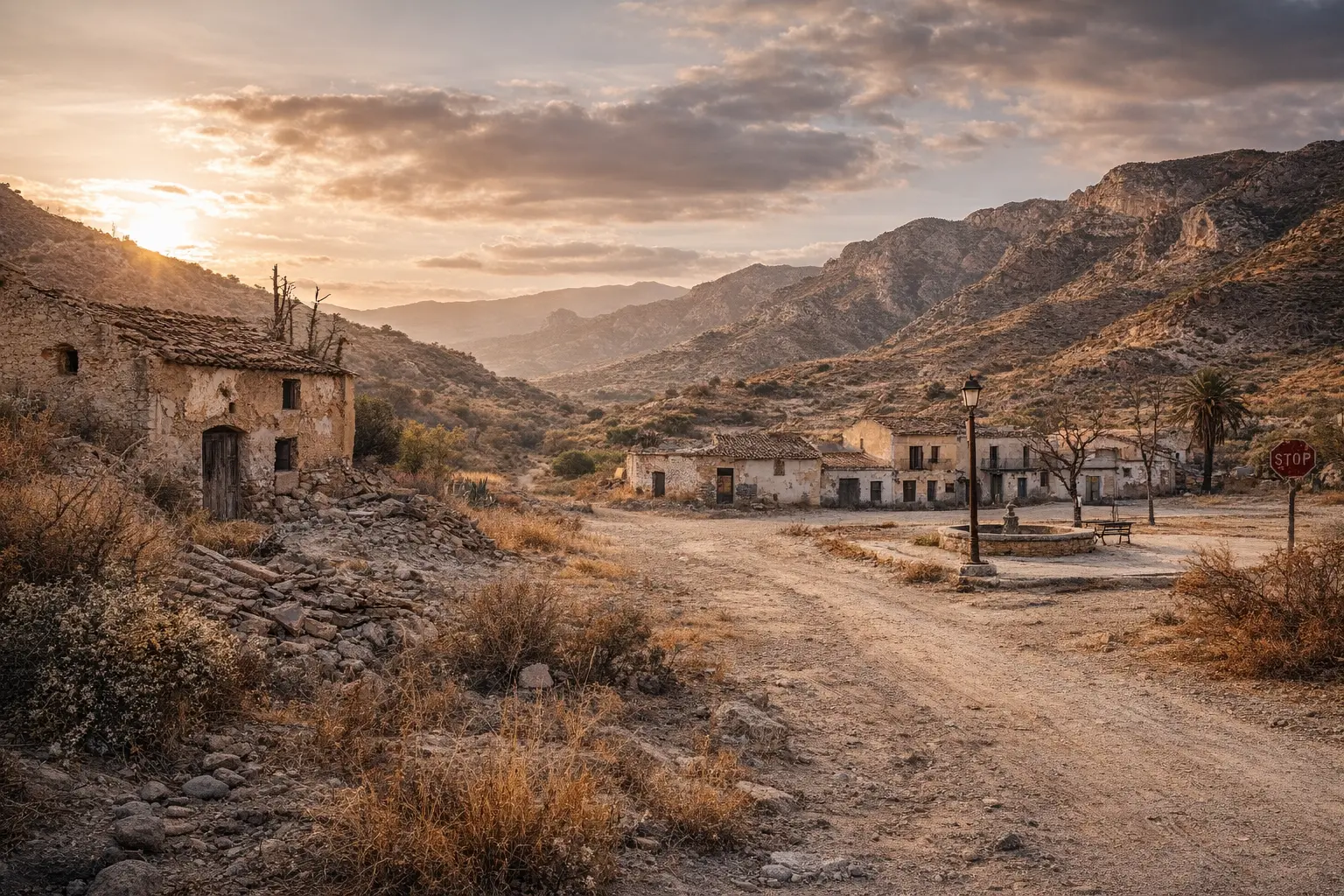
What inland Almeria offers above all else is quiet. Not curated tranquillity, but genuine absence of noise, choice and stimulation.
For some people, this is restorative. For others, it becomes oppressive after a few days.
Shops close early. Sundays are slow. Social life is visible but inward-facing. Integration, whether temporary or long-term, requires effort and humility.
There is little tolerance for spectacle. The interior does not perform for visitors.
This is where many mismatches occur: visitors arrive seeking peace, but underestimate how complete that peace can be.
Climate is not “mild” — it is extreme and predictable
Marketing often frames inland Almeria as a year-round destination thanks to sun and low rainfall. This is technically accurate, but practically misleading.
Summers are intense. Shade is limited. Heat management defines daily life. Winters, while often sunny, can be genuinely cold at altitude, with snow not uncommon in the Filabres or Alpujarra.
The climate is stable, not gentle. If you doubt that, check the official AEMET climate normals for Almeria — the evaporation rates and temperature swings leave little room for romanticism.
Inland Almeria and the coastal myth
The interior is frequently positioned as a counterpoint to the coast — quieter, more authentic, less developed. This comparison is both fair and lazy.
Many inland areas depend economically on coastal dynamics, whether through seasonal work, logistics or second-home patterns. Likewise, the coast often relies on the interior for agriculture, water and labour.
They are not opposites. They are interdependent.
Understanding inland Almeria requires stepping outside the coastal vs rural narrative entirely.
Who inland Almeria is for
Inland Almeria tends to work well for people who:
- value quiet over choice
- accept limited services without frustration
- enjoy repetition and routine
- plan ahead rather than improvising
- are comfortable being observers, not participants
It tends not to work for those who:
- expect convenience or spontaneity
- require constant variety
- interpret silence as absence
- want tourism to meet them halfway
Neither preference is better. They are simply different.
Frequently asked questions
Is inland Almeria suitable for a short holiday?
It can be, but it works best for visitors who enjoy slow pacing, planning ahead and limited choice. For short trips focused on variety or spontaneity, the coast is often a better fit.
Is inland Almeria good for hiking and cycling?
Yes, but with preparation. Routes are long, services are limited and conditions can be extreme. It suits experienced walkers and cyclists more than casual activity seekers.
Is inland Almeria quiet all year round?
Largely yes. Summer and weekends bring some movement, but most inland areas remain calm year-round, especially outside peak seasons.
Who should avoid inland Almeria?
Visitors who need convenience, constant entertainment or frequent choice often find inland Almeria restrictive rather than relaxing.
Inland Almeria doesn’t adjust itself to visitors. If you come prepared, it can be deeply rewarding. If you don’t, it will simply remain what it is.
For a broader picture of daily life inland, our village guide shows how individual towns and villages function year-round, including their local holidays.
Looking for honest, grounded insights into places across the province? Explore more in our Towns & Villages and Travel Tips sections.
Travel Tips
Almeria Weather Today: Yellow Warning for Rain and Storms
Published December 28, 2025 | Almeria Weather Today
Almeria Weather Today: Yellow Warning for Rain and Storms Across the Province
The Spanish meteorological agency AEMET has issued a yellow weather warning for large parts of Almeria province today, due to periods of heavy rain and possible thunderstorms.
The warning applies to coastal areas, the Levante Almeriense and inland zones, meaning that weather conditions may be locally intense across much of the province.
Affected Areas
Poniente Almeria and Almeria city are under a yellow warning for rain and thunderstorms, with short but intense downpours possible. Localised flooding may occur, particularly in urban areas and near ramblas.
Levante Almeriense, including both coastal and inland parts of the region, is also covered by the yellow warning. Rainfall can be heavy at times, accompanied by thunderstorms and reduced visibility.
Inland areas, including parts of the Almanzora Valley and higher elevations, are likewise affected. While rainfall totals may vary, storms can develop quickly and conditions may change rapidly.
What to Expect
Today’s weather is expected to remain unsettled, with periods of rain, occasional thunderstorms and cloudy skies. Rain may fall unevenly, meaning some locations could experience significantly heavier showers than others.
Gusty winds and reduced visibility are possible during heavier showers, particularly along exposed roads and coastal stretches.
Practical Advice
Residents and visitors are advised to:
- Stay informed via official updates from AEMET
- Avoid crossing ramblas or flooded roads
- Drive with caution during heavy rain or thunderstorms
- Adjust outdoor plans if conditions deteriorate
A yellow warning indicates that weather conditions may be potentially hazardous, especially for vulnerable areas, but does not imply extreme or exceptional conditions.
Want to discover local tips, beaches, routes and hidden gems? Browse our latest Travel Tips and plan your best days in Almeria.

Uleila del Campo guide. Discover Uleila del Campo

Lucainena de las Torres guide. Discover Lucainena de las Torres

Almond blossom routes in Almeria: villages, walks and when to go

Events in Almeria: January & February concerts, theatre and Carnaval

Albox sets out key projects for 2026 as new municipal budget takes effect

€5.4 million investment approved for new wastewater collectors in Balanegra, Berja and Dalias

Hailstorm hits Adra on Three Kings’ Day as Storm Francis brings more unstable weather

Almeria remains “frozen” as Storm Francis lingers, with frost alerts and road impacts

Antas plans cultural and walking landmark at Cabezo Maria

Rain shortens Three Kings Parade in Huércal-Overa


Almeria Housing Market Outlook 2026: Rising Prices, Slower Pace
Published December 30, 2025 | Category: Real Estate & Economy TL;DR: Almeria enters 2026 with a housing market that is...


€26 million allocated for new AVE railway station in Almeria
Published December 23, 2025 | Category: Infrastructure TL;DR: The Andalusian regional government will invest €26 million in the future AVE...


Costa de Almeria closes 2025 with strong tourism momentum ahead of FITUR 2026
Published December 23, 2025 | Category: Community TL;DR: Costa de Almeria has wrapped up 2025 with more than 70 tourism...


High-Speed Rail to Almeria Faces New Challenge After Roman Cemetery Found in Lorca
Published December 22, 2025 | Category: Infrastructure TL;DR: A late Roman cemetery discovered during AVE tunnelling works in Lorca adds...
Uleila del Campo guide. Discover Uleila del Campo
Published January 8, 2026 | Category: Towns & Villages TL;DR: Uleila del Campo is a working inland village, not a...
Lucainena de las Torres guide. Discover Lucainena de las Torres
Published January 8, 2026 | Category: Towns & Villages TL;DR: Lucainena de las Torres is a small, well-kept village in...

Cantoria guide. Discover Cantoria
Published January 6, 2026 | Category: Towns & Villages TL;DR: Cantoria is a larger inland town in the Almanzora valley...
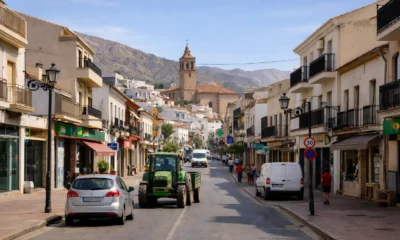

Canjayar guide. Discover Canjayar
Published January 4, 2026 | Category: Towns & Villages TL;DR: Canjayar is a larger inland town in the Andarax valley...
-
 Community5 days ago
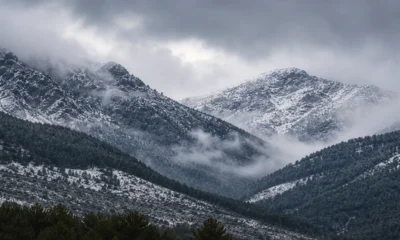
Storm Francis brings snow to inland Almeria as yellow alert remains active
-
 Community6 days ago
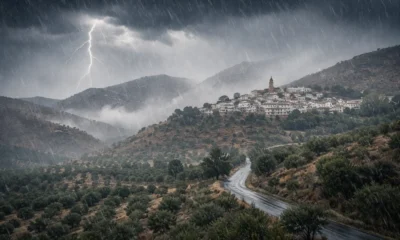
AEMET activates yellow alert in Almeria as Storm Francis brings heavy rain
-

 Towns & Villages6 days ago
Berja guide. Discover Berja
-

 Towns & Villages7 days ago
Benizalon guide. Discover Benizalon
-
Towns & Villages5 days ago
Canjayar guide. Discover Canjayar