
Real Estate & Economy
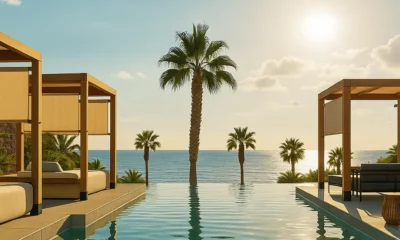
Las Terrazas Macenas Gets Green Light | New €50M Residential Project
Published December 6, 2025 | Category: Real Estate & Economy
TL;DR: Las Terrazas Macenas, a new €50.4 million residential development of 125 homes inside Macenas Mediterranean Resort in Mojacar, has received its building permit and is set to become a new focal point for high-end living and tourism on the Almeria coast.
Green Light for Las Terrazas Macenas in Mojacar
A major new residential project has taken a decisive step forward in Mojacar. Grupo Insur, a publicly listed real estate developer, together with the Cosentino family office, has obtained the building permit for Las Terrazas Macenas, a development of 125 homes within the Macenas Mediterranean Resort on the southeastern edge of the municipality.
The project represents an investment of around €50.4 million and forms part of a wider plan to reposition Macenas as a luxury enclave at the gateway to the Cabo de Gata Natural Park. For Mojacar and the surrounding coastline, it signals renewed confidence in the high-end residential and tourism market.
125 Homes with Sea Views and Resort Facilities
Las Terrazas Macenas will offer a mix of one, two and three bedroom apartments designed in a contemporary Mediterranean style. According to the developer, the homes have been planned to maximise natural light, with layouts that extend living spaces out onto generous terraces.
The development will include apartments with sea-view terraces, penthouses and ground floor properties with private gardens. Communal areas are set to feature an outdoor infinity pool, a heated indoor pool, a social club with chill-out terrace and a seafront solarium, positioning the complex firmly in the upper segment of the local market.
Las Terrazas Macenas sits inside Macenas Mediterranean Resort, a residential, tourism and leisure complex being developed around the idea of “discreet luxury” and a lifestyle that blends nature, wellbeing and coastal living.
Jobs and Investment for Eastern Almeria
The construction of Las Terrazas Macenas is expected to generate more than 300 direct and indirect jobs, both on site and through associated services. For Mojacar and the eastern part of the province, it adds a significant volume of investment at a time when interest in second homes, relocation and long-stay coastal living remains strong.
Grupo Insur highlights that the alliance with the Cosentino family office allows the company to strengthen its position in Eastern Andalusia and secure a prominent location on the Almeria coast. For buyers, the combination of a branded developer, a large-scale resort and a well-known coastline is likely to be a key part of the project’s appeal.
Part of a Wider Transformation at Macenas
The Las Terrazas Macenas project is only one element in a broader transformation of Macenas Mediterranean Resort. The resort already offers or plans to offer a social club with restaurants, pool and lounge area, sports facilities, shops and wellness services, with the aim of creating a self-contained environment that remains closely connected to the surrounding landscape.
A central piece in this strategy is the renovation of the Macenas golf course, designed by Stirling & Martin. The course is being updated with a focus on efficient use of recycled water, biodiversity measures and native vegetation. Once completed, it is expected to feature 18 holes, a golf school, restaurant and pro shop, with an opening forecast around the end of 2026.
At the same time, work is progressing on what is planned to be the first five star hotel in Mojacar, adding another layer to the area’s positioning as one of the key hubs for luxury tourism in the province of Almeria.
What Las Terrazas Macenas Means for Mojacar
For local residents and potential buyers, Las Terrazas Macenas represents both an opportunity and a sign of how the coastline around Mojacar is evolving. On one hand, the project brings new employment, services and visibility to the area. On the other, it reinforces the trend towards higher-end residential and tourism products clustered around resort-style developments.
As construction moves forward, attention is likely to focus on how the project integrates with its surroundings, the balance between residential use and tourism, and the extent to which the promised “discreet luxury” remains compatible with the natural environment that makes this stretch of the Almeria coast so distinctive.
If you are considering buying property in the area, you can also explore market insights and listings in Mojacar and the surrounding coastline at AlmeriaHousing.com.
Want to follow more updates on housing, investment and the local economy across the province? Browse the latest stories in our Real Estate & Economy section.
Real Estate & Economy
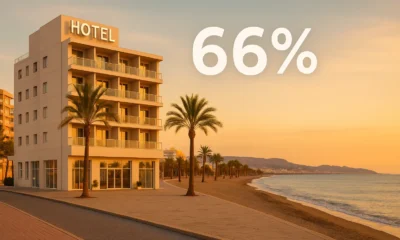
Hotels in Almeria Expect 66% Occupancy During December Long Weekend
Published December 5, 2025 | Category: Travel Tips
TL;DR: Hotels in Almeria are expected to exceed 66% occupancy during the upcoming December long weekend, reflecting strong tourism demand across Andalusia.
Hotels in Almeria Forecast 66% Occupancy for December
Hotels in Almeria are forecasting an occupancy rate of 66.4% for the upcoming Constitution and Immaculate Conception long weekend. The regional survey shows that while the figure is slightly below the Andalusian average of 70%, it still contributes to a very strong end to the tourism year.
The Minister of Tourism, Arturo Bernal, confirmed that these expectations follow the strong results from the October long weekend and fit into the positive trend throughout 2025. Andalusia has already surpassed its annual benchmark with more than 51 million hotel overnight stays recorded between January and October.
Across the region, every province has booked more than 65% of hotel rooms for the three-day weekend. Leading the forecasts are Granada (77%), Seville (75.4%), Cadiz (72.1%) and Jaen (71.8%), with Almeria at 66.4%.
The outlook is also positive for other types of accommodation and air travel:
- Rural accommodation: Around 60% occupancy
- Tourist rental homes: Around 35.4% occupancy
- Air traffic: 951 flights and over 168,000 seats across Andalusia between Friday and Sunday
Spain is the leading source market, with strong growth in visitors from the United Kingdom and Germany.
Data sourced from the Ministry of Tourism of the Junta de Andalucia, as reported via regional media.
Want to discover local tips, beaches, routes and hidden gems? Browse our latest Travel Tips and plan your best days in Almeria.
Real Estate & Economy
Albox Consumer Voucher: €50,000 in Discounts for Christmas Shopping
Published December 1, 2025 | Category: Real Estate & Economy
TL;DR: Albox has launched the second edition of its Albox Consumer Voucher campaign, investing €50,000 in discount vouchers to support Christmas shopping at local businesses and attract visitors from across the Almanzora Valley.
Albox Strengthens Its Position as a Commercial Hub With Second Consumer Voucher Campaign
Albox has officially launched the second edition of its Consumer Voucher campaign, a local economic initiative designed to support families, shops, and small businesses during the Christmas season. Running from December 1st to January 10th, the programme builds on the overwhelming success of last year’s edition, which generated more than €200,000 in local spending.
With a new budget of €50,000, the Town Hall aims to encourage residents and visitors alike to shop locally during one of the most important retail periods of the year. The Albox Consumer Voucher objective is twofold: to ease the financial burden on families during the festive season and to strengthen the commercial fabric of Albox and the wider Almanzora Valley.
The Consumer Voucher campaign is part of a broader strategy by the Albox Town Hall to position the municipality as a leading commercial centre in inland Almeria. By combining direct financial support with targeted promotional campaigns, the Town Hall hopes to consolidate Albox as a natural shopping destination for surrounding towns and villages.
How the Albox Consumer Voucher system works this year
The mechanics of the programme are simple, accessible, and designed to maximise rotation so that as many people as possible can benefit:
- Each voucher provides a €5 discount on purchases.
- Vouchers can be downloaded online through the Town Hall’s official platform.
- They must be redeemed in €20 increments at participating businesses (for example, spend €20, pay €15).
- Users can access up to five vouchers per week.
- Unused vouchers automatically return to the common pool every week to ensure fair redistribution.
More than 45 local businesses have joined the campaign so far, ranging from clothing shops, supermarkets, bookshops, and gift stores to bars, cafés, restaurants, hairdressers, beauty salons, and small service providers. The list is expected to grow as more businesses sign up during the campaign.
This variety ensures that families can use the vouchers for a wide range of Christmas needs – from holiday meals and clothing to gifts, dinners, school materials, or personal care. For many households, these discounts can make a noticeable difference in a period traditionally marked by higher expenses.
Open to everyone – not just residents
One of the most attractive aspects of the initiative is that it is open to the general public, not just residents of Albox. This detail is important because Albox has long served as a commercial centre for the broader Almanzora Valley.
By extending eligibility, the Town Hall encourages visitors from nearby municipalities such as Arboleas, Cantoria, Zurgena, Partaloa, Oria, and even Huercal-Overa to do their Christmas shopping in Albox. In practice, this helps attract more foot traffic into the town’s commercial areas and boosts revenue for small businesses that rely heavily on seasonal spending.
For many shop owners, the campaign also serves as free promotion: customers discover new shops, cafés, and services that they might not have visited without the additional incentive of the vouchers. This creates a ripple effect that can last beyond the Christmas season.
A €50,000 investment that multiplies itself in the local economy
During last year’s first edition, the Town Hall invested €40,000, which – according to official reports – translated into more than €200,000 in purchases made at local establishments. This means that for every euro invested by the municipality, more than five euros were reinjected into the local economy.
This year’s increased budget of €50,000 demonstrates the municipality’s confidence in the programme’s broader economic and social value. Local business leaders, including the Almeria Chamber of Commerce, support the campaign and provide information and assistance to participating merchants through their local office in the town.
A word from the Mayor
Mayor Maria del Mar Alfonso highlighted the importance of the initiative in supporting both families and entrepreneurs:
“Last year this campaign was a resounding success. We invested €40,000 directly from the Town Hall, which translated into over €200,000 in sales for our local businesses and restaurants. This year, we’ve increased our contribution to €50,000 in discount vouchers, which families can use to shop at our local businesses. We’re helping them through this period of high expenses while ensuring that this money stays in our town.”
The mayor also underlined that Albox is “a town of entrepreneurs” and that the municipality will “continue to stand by them and support them in every way possible.”
A growing vision for local commerce in Albox
The success of this voucher programme aligns with the Town Hall’s broader strategy to strengthen Albox as one of the leading commercial centres in the Almanzora region. With a growing population, a strategic location, and a strong network of small and medium-sized enterprises, Albox is increasingly positioned as a competitive alternative to larger commercial hubs.
Initiatives such as the Consumer Voucher campaign help to:
- Reinforce customer loyalty to local businesses.
- Bring more visibility to small shops and services.
- Encourage sustainable local spending.
- Stimulate weekend and Christmas tourism from surrounding areas.
- Maintain economic activity during the winter months.
This type of municipal support has become particularly valuable for small shops, many of which face rising costs, online competition, and seasonal fluctuations. For them, the combination of increased customer flow and direct discounts can be decisive at the end of the year.
Residents and businesses respond positively
Local reaction has been strongly positive, especially among families and workers facing rising prices during the holiday period. Many residents appreciate the fact that vouchers are easy to obtain, do not require complex registration, and can be used for everyday shopping as well as Christmas gifts.
Businesses involved in the programme are also seeing tangible benefits: increased customer flow, more sales of mid-range products, higher visibility, and repeat visits – all essential during the Christmas season.
With the second edition of the Consumer Voucher campaign now under way, Albox continues to strengthen its image as a dynamic and welcoming commercial hub in the heart of the Almanzora Valley. More information about the initiative and participating businesses can be found through the official website of the Albox Town Hall.
Stay updated with the latest economic developments, investment trends, and business initiatives across Almeria. Explore more stories in our Real Estate & Economy section.
Real Estate & Economy
Blanco Macael Marble Moves Toward EU PGI Status, Protecting Almeria’s White Gold
Published December 1, 2025 | Category: Real Estate & Economy
TL;DR: Macael marble, long celebrated as Almeria’s “white gold,” is entering a new European recognition process. Beyond the administrative aspect, the initiative highlights the cultural, economic and historical importance of this iconic natural stone.
Macael Marble Moves Toward New European Recognition
For centuries, macael marble has defined the landscape, culture and economy of northern Almeria. Its unmistakable white and grey tones, exceptional durability and refined texture have earned it a reputation as one of Spain’s finest natural stones. Today, the sector is taking an important step forward as macael marble begins a formal European process designed to better protect and strengthen the identity of this historic material.
This new procedure includes the possibility of geographical protection at EU level, but the significance extends far beyond any technical classification. What truly matters is what the initiative represents: a renewed effort to recognise the heritage, craftsmanship and economic value embedded in macael marble, a stone that has shaped civilizations, supported families and contributed to the international image of Almeria for more than two thousand years.
A Stone Rooted in History and Civilisation
Macael marble has been used continuously since antiquity. Archaeological evidence confirms that the Romans extracted and transported the stone for theatres, temples and public buildings across the peninsula. Its purity and strength made it ideal for large-scale structures, sculptures and decorative elements that needed to withstand both weather and time.
Across the centuries, the stone retained its prestige. One of the most iconic examples is its presence in the Court of the Lions in the Alhambra of Granada. The 124 slender columns and the central fountain—perhaps the most photographed element in Andalusian architecture—were all carved from macael marble. Its soft luminosity, when touched by natural light, gives the courtyard its distinctive atmosphere of elegance and calm.
The stone also appears in the Roman Theatre of Merida, the Mosque-Cathedral of Cordoba, the palatial complex of Madinat al-Zahra, several Renaissance and Baroque monuments across Andalusia, and important areas within the Royal Palace in Madrid. Few natural materials in Spain can claim such a uninterrupted lineage of prestige.
Today, macael marble continues to be used in luxury interiors, contemporary architecture, high-end restoration projects and international design work. Its distinctive balance of colour and texture makes it a favourite among architects and decorators seeking timeless natural materials.
A Sector That Grounds the Local Economy
Beyond its cultural value, macael marble is a cornerstone of the economy in the Sierra de los Filabres. The region’s quarries, factories and workshops provide stable employment and sustain a vibrant network of micro-enterprises, artisans, transport companies and design studios. Many families have worked with marble for generations, preserving techniques that combine traditional craftsmanship with modern technology.
The economic relevance of the stone sector has grown over the last decades, with macael marble reaching markets in Europe, the Middle East and North America. Export figures continue to rise as international demand expands. High-end residential projects, boutique hotels, commercial spaces and restoration programs increasingly rely on authentic macael marble for its quality, appearance and longevity.
Given this global reach, ensuring the authenticity and distinction of macael marble is essential. The current European recognition process supports this goal: it strengthens the identity of the material and helps protect it from imitation stones produced elsewhere.
Why European Recognition Matters
Europe’s updated framework for artisanal and industrial products allows materials with a strong regional identity to be formally recognised and protected. For macael marble, this represents an opportunity to highlight its geological origin, historical continuity and the skilled craftsmanship behind its production.
The Junta de Andalucia, together with the national Ministry of Industry, Energy and Mines, is supporting the sector through this multi-stage process. While geographical protection is one component, the broader aim is to reinforce the competitive position of macael marble in global markets, support rural employment and safeguard one of Almeria’s most emblematic industries.
The process also encourages sustainable practices, innovation and collaboration between companies, helping strengthen the long-term resilience of the entire value chain.
A Future Built on Heritage
The sector’s development is closely aligned with the CRECE Industry Plan for the Stone and Marble Sector, promoted by the regional government. This strategy focuses on modernising traditional industries, improving sustainability, adopting new technologies and strengthening innovation.
For the stone and marble industry, the plan supports improved extraction techniques, digital transformation in factories, product diversification, training for new professionals, and international promotion. Together with the current European recognition process, it creates a solid foundation for the sector’s future development.
Macael marble is more than a building material: it is a symbol of Almeria’s identity, a legacy handed down over centuries, and a source of cultural and economic strength. As the recognition process advances, the objective remains clear—preserving the value of a stone that continues to define the character and reputation of the province.
For more updates on local industry and economic development, visit our Real Estate & Economy section.
Infrastructure
Murcia–Almería High-Speed Rail: €9.6 Million in New Funding
Published November 27, 2025 | Category: Infrastructure
TL;DR: Spain has approved €9.6 million in new supply contracts for the Murcia–Almería High-Speed Rail, supporting progress on the Lorca–Vera and Vera–Almería sections as the corridor moves toward full assembly and electrification.
Murcia–Almería High-Speed Rail: Progress, Funding and Next Steps
The Murcia–Almería High-Speed Rail has received a new funding package worth €9.6 million from Spain’s Ministry of Transport and Sustainable Mobility, managed through Adif Alta Velocidad. The contracts focus on supplying essential technical components required for the next stage of track assembly.
Of this amount, €5.3 million is dedicated to advanced turnouts for the Vera–Almería section. These systems allow high-speed trains to safely change tracks and are crucial for finalizing the alignment.
A further €4.3 million is assigned to expansion joints for the Lorca–Vera segment. These devices absorb rail movement caused by temperature changes, ensuring long-term structural integrity and safety.
The investment adds to previous contracts for sleepers, rail sections, drainage systems and safety equipment, forming a comprehensive package that transitions the corridor into its technical phase.
Construction progress across the Murcia–Almería High-Speed Rail corridor
Work along the nearly 200 km Murcia–Almería corridor is now entering a coordinated phase of track installation, electrification and systems integration. Platform construction is largely completed, opening the way for full assembly.
On the Murcia–Lorca stretch, track laying is already underway, supported by ongoing electrification works that include catenary supports, power-supply structures and transformer installations.
The Lorca–Vera section is preparing for its final assembly phase. Deliveries of sleepers, fastening systems and structural components are ongoing, while contractors finalize tender procedures for on-site assembly.
Between Vera and Almería, construction teams are installing materials previously contracted, including rails, sleepers and turnout systems. This section includes multiple viaducts, access zones and tunnel approaches, all requiring precise coordination.
Across the entire route, progress continues on ERTMS signalling, fibre-optic communication networks, noise protection barriers and energy substations — all of which must be in place before test runs begin.
Technical specifications and engineering highlights
The high-speed line is designed for operations up to 300 km/h, using double standard-gauge track. In select sections, it runs parallel to Iberian-gauge freight lines, allowing simultaneous passenger and logistics use.
Major engineering structures include long tunnels, multi-span viaducts and complex cut-and-cover works. One of the most distinctive achievements is the completed Viaduct of the Ugly Ones, marking a major structural milestone on the Almería side.
Other technical elements include reinforced retaining walls, advanced drainage systems, anti-vibration slabs and concrete structures designed to withstand high-speed dynamic loads.
Urban integration and station connections
At both the Murcia and Almería ends of the corridor, urban integration works play a major role. The transformation of Almería’s rail access — including its underground connection — is coordinated with the high-speed project and managed jointly by Adif and the Ministry of Transport and Sustainable Mobility.
In Almería city, tunnel entrances, ventilation systems and safety corridors are being prepared to interface with the new underground alignment. Once complete, the connection will link directly with the future intermodal station.
Regional benefits: faster mobility and stronger links
The new corridor will significantly improve long-distance travel for Almería Province. Shorter travel times to Murcia, Alicante, Valencia, Catalonia and Madrid will reshape travel patterns for both residents and businesses.
For Vera, the future high-speed station will create a direct link between inland towns and major destinations across eastern Spain. Improved accessibility is expected to boost year-round tourism in areas such as Vera Playa, Garrucha and Mojácar.
Students, workers, medical travellers and seasonal visitors will benefit from faster, more predictable transport options that reduce dependence on long road journeys.
Economic and territorial impact
Infrastructure projects of this scale often stimulate investment around station areas. As the Murcia–Almería corridor advances, interest is already increasing in residential and commercial development near key nodes.
Almería’s agricultural sector stands to gain from improved logistics, as faster freight connections help reduce distribution times to national and European markets.
Local governments also anticipate improvements in public transport integration, road access, and urban renewal tied to the arrival of high-speed services.
Outlook and next steps
With new contracts activated for turnouts, expansion joints, electrification components and signalling systems, the Murcia–Almería corridor is moving decisively toward its final phase. The next stages include full track assembly, systems testing and certification.
Although specific operational dates may shift as work progresses, current indicators show stable momentum toward fully incorporating Almería into Spain’s high-speed rail network.
For official updates, progress documents and technical reports, visit Adif Alta Velocidad and the Ministry of Transport and Sustainable Mobility.
For more updates from across the province, visit our Infrastructure category.

Arboleas Christmas Lights 2025 | Switch-On Ceremony in Plaza de España

Las Terrazas Macenas Gets Green Light | New €50M Residential Project

Things to Do at Christmas in Mojacar: Lights, Markets & Family Fun

Christmas in Albox Begins with Return of Monumental Nativity Scene

Hotels in Almeria Expect 66% Occupancy During December Long Weekend

Mojacar Christmas Lights Switch-On Makes History with Record Visitor Numbers

Roquetas de Mar Christmas 2025 – Full Guide to Events, Lights, Concerts & Family Activities

Vera Nativity Scene 2025: A Monumental Journey to Ancient Rome

Almeria Weather Today: Cool Start, Mild Afternoon Across Province

Albox Consumer Voucher: €50,000 in Discounts for Christmas Shopping
Las Terrazas Macenas Gets Green Light | New €50M Residential Project
Published December 6, 2025 | Category: Real Estate & Economy TL;DR: Las Terrazas Macenas, a new €50.4 million residential development...
Hotels in Almeria Expect 66% Occupancy During December Long Weekend
Published December 5, 2025 | Category: Travel Tips TL;DR: Hotels in Almeria are expected to exceed 66% occupancy during the...

Albox Consumer Voucher: €50,000 in Discounts for Christmas Shopping
Published December 1, 2025 | Category: Real Estate & Economy TL;DR: Albox has launched the second edition of its Albox...


Blanco Macael Marble Moves Toward EU PGI Status, Protecting Almeria’s White Gold
Published December 1, 2025 | Category: Real Estate & Economy TL;DR: Macael marble, long celebrated as Almeria’s “white gold,” is...

Things to Do at Christmas in Mojacar: Lights, Markets & Family Fun
Published December 5, 2025 | Category: Events TL;DR: Looking for things to do at Christmas in Mojacar? The town offers...
Christmas in Albox Begins with Return of Monumental Nativity Scene
Published December 5, 2025 | Category: Events TL;DR: Christmas in Albox officially began yesterday with the return of the Monumental...

Roquetas de Mar Christmas 2025 – Full Guide to Events, Lights, Concerts & Family Activities
Published December 3, 2025 | Category: Events TL;DR: Roquetas de Mar launches its Christmas 2025 programme under the theme “Estrella...
Vera Nativity Scene 2025: A Monumental Journey to Ancient Rome
Published December 2, 2025 | Category: Towns & Villages TL;DR: Vera has inaugurated its Monumental Nativity Scene 2025 at the...
-
Towns & Villages5 days ago
Vera Nativity Scene 2025: A Monumental Journey to Ancient Rome
-

 Events6 days ago
Thousands Gather as Mojacar Switches On Its Christmas Lights
-
Events3 days ago
Roquetas de Mar Christmas 2025 – Full Guide to Events, Lights, Concerts & Family Activities
-
 Community3 days ago
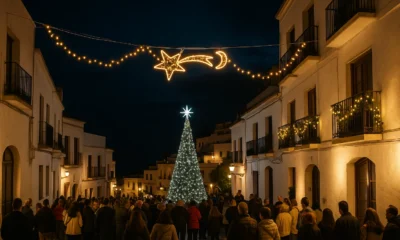
Mojacar Christmas Lights Switch-On Makes History with Record Visitor Numbers
-
 Events6 days ago
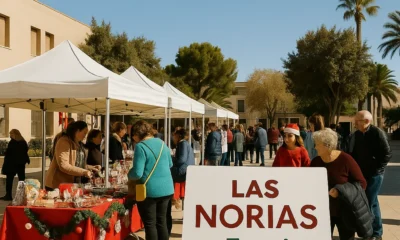
Las Norias Welcomes Christmas with Its Traditional Festive Market
-
 Travel Tips5 days ago
Almeria Weather Today: Cool Start, Mild Afternoon Across Province